
I recently watched a webinar (https://mecs.org.uk/recording-of-wfp-steer-webinar-fuel-efficient-menus-and-cooking-practices-to-reduce-firewood-consumption-in-rwandas-national-school-feeding-programme/ )which looked at the potential of using cleaner cooking techniques for school breakfast and lunch programs in Rwanda. Food is typically cooked with wood fuel which is problematic because of the negative impacts on air quality and the forest ecosystem.
Here are my comments on the webinar.
I appreciated the webinars holistic approach.. I found much of the information presented highly valuable. The webinar was a catalyst for these comments.
Retained Heat Cooking
Cooking large quantities of food provides some unique opportunities for clean cooking. Larger volumes of food have less surface area per unit volume. The length of time food can be kept hot is proportional to it’s volume and inversely proportional to it’s surface area, as a consequence retained heat cooking becomes much more effective when large quantities of food are cooked. With retained heat cooking food can remain at simmering temperatures for many hours. From my experience presoaked beans can be brought to a boil, the heat turned off and the beans will be cooked in one to two hours. This cooking method can work with any fuel. An insulated pot can be designed to work as both as an insulated cooking device and a retained heat cooker, I have used a number of these devices.
Precooked Beans
Using retained heat cooking it will take about the amount of energy to cook precooked beans as it does to cook dried beans since cooking either only requires energy to bring the food to a boil.
Solar Preheater
The energy required for cooking could be reduced further by incorporating a solar thermal preheater. The preheater could also supply pasteurized and hot water for cleaning. With retained heat cooking a preheater could easily cut the energy required for cooking in half.
EPC’s (electric pressure cookers)
Both EPC’s and retained heat cookers are fairly efficient, however from my analysis retained heat cooking uses less energy. When cooking in an EPC the food must be heated to a higher temperature in addition the added structural elements needed to support the pressurized chamber must also be heated. Heating more material to a higher temperature requires additional energy. Compared to a pot when cooking a given volume of food the size of the EPC must be increased by about 30%, this prevents the vents from being clogged, however this also increases the amount of mass which must be heated, further increasing energy consumption. Another consideration with EPCs is the wattage they consume, this point is particularly important if multiple EPCs are used at the same time, the electric service may not be able to supply the large amount of power required. With retained heat cooking a smaller wattage cooker could be used, cooking will take longer, however no attention, need be paid to the food while cooking, it could even cook overnight.
Convenience
When cooking with retained the cooking process requires little attention, there is no need for stirring to keep food from burning at the bottom of a pot also with no burnt food cleaning is much easier.
Water Use and Presoaking
In the webinar it was mentioned that presoaking beans would require additional water, cooking with the soak water will eliminate the need for additional water. It is sometimes claimed that cooking with the soak water effects the taste of the beans, a blind taste will show whether this idea is valid.
Wood Storage
To minimize rain exposure and maximizing drying, stored wood could form a narrow north south running wall. The wall could be held in place by wooden stakes. A rain cap on the top of the wall would also help keep the wood dry. When sunny the east side of the wall would receive the morning sun and the west side afternoon sun, accelerating drying. Breezes from the east would also speed drying.
Testing Retained Heat Cooking
It would be beneficial and straight forward to test this technique. I suggest using a pot 20 liters or larger. When cooking beans presoak them overnight. When heated the beans will stay hot longer if the pot is fairly full. The insulating cover could be made by first resting the pot on an insulating layer. This layer could be made by first placing a piece of Al foil, the size of the bottom of the pot on a table, three small wooden blocks would then be placed on the foil to support the pot. The blocks could be one or two cm thick. The pot would than be covered with a thick layer of blankets and towels. Do not cover the pot before steam stops escaping from the cover, since moisture from the steam will degrade the insulation. Check the beans one and two hours later. After an hour the beans still should be above 95 Deg C. A more convient cooker could be made which would insluate the beans while they are being heated and also act as a retained heat cooker when the heat is turned off. I have built a number of cookers of this variety. With retained heat cooking food can cook overnight with no attention and remain hot enough to eat the next morning.
I would be glad to discuss these concepts and how they may be implemented.
Fortunately the coronavirus enters the environment from just two point sources: the nose and the mouth. If we all wore CVBD’s that were 100% efficient, we could eliminate the virus in the environment in the time it takes the virus to die on previously contaminated surfaces. It would then exist solely in the bodies of those infected with the virus.
Existing masks have two functions: filtering the air being inhaled and blocking droplets that are being exhaled from the wearer’s nose and mouth. The CVDB has a single task—blocking the droplets exiting the nose and mouth. The CVDB could be categorized as a new class of safety equipment.
A variety of mask types could work effectively as CVDB’s, including N95’s and surgical masks. An N95 is designed to filter very small particles—particles that are much smaller than the droplets spreading the coronavirus
A surgical mask is designed to catch droplets expectorated by a medical caregiver during an operation as well as block relatively large droplets that would otherwise be inhaled. This type of mask is adequate to block the coronavirus. (Although the virus is very small, the droplets that carry it are much larger.)
A consequence of the N95’s ability to filter extremely fine particles is that breathing is more difficult compared to a surgical mask. N95 masks also fit more tightly and are not as comfortable to wear for long periods of time. Another factor in favor of surgical masks is that they cost considerably less than N95’s. Currently both N95 masks and surgical masks are in short supply. Home-made masks and bandannas fashioned into a mask could make effective CVDB’s.
CVDB’s will eliminate pathogen-containing droplets in the air, thus preventing people from inhaling the coronavirus into their lungs. Eliminating airborne droplets will also keep surfaces from being contaminated and hands will not pick up the virus. With virus-free hands, touching your face will be less problematic. Trying to eliminate viruses on surfaces by cleaning them is a very temporary fix. As soon as a surface is cleaned, it can be recontaminated by an infected but asymptomatic person. With no droplets in the air, even if two people inadvertently get within 6 feet of each other, they will still not inhale the virus. The benefits of using CVDB’s are synergistic.
Why Everyone Should Be Wearing CVDB’s

At the grocery store, the cart you’re pushing may have been cleaned 10 minutes before you arrived. Yet virus-containing droplets may have been deposited on it immediately after the surface was cleaned. This same scenario applies to all surfaces in the store. If an asymptomatic person infected with the virus is standing over the lettuce while trying to figure out which head to buy, the lettuce can become contaminated with virus-containing droplets. If you run into a friend who is asymptomatic and has the virus, you inhale their droplets if you do not do proper social distancing. The checkout person is most susceptible. They can contract the virus from the air, from purchased groceries, from a contaminated counter, or from money. If all the store’s occupants were wearing CVDB’s, all of these sources of contamination could be eliminated.
Parks and beaches have been closed in Mendocino County. If CVDB’s were used, the parks and beaches could stay open with a higher degree of safety. We need these outdoor recreation areas for our sanity.
Fortunately the coronavirus can be controlled by employing a number of low- tech measures: social distancing, hand washing, cleaning surfaces, and using CVDB’s. Wearing masks worked effectively in Hong Kong where seven million people live close together on a small island. The masks were effective CVDB’s.
This excellent video produced in the Czech Republic does an explaining why masks should be warn in public.
https://www.youtube.com/watch?v=HhNo_IOPOtU&app=desktop
A rule of thumb based on the Arrhenius rate equation is that the reaction rate of chemical and biological reactions doubles each time the temperature increases 10 deg C. The Arrhenius rate equation quantifies this exponential rate of increase. As a consequence of the Arrhenius rate equation as the temperatures of the earth increases chemical and biological reaction rates will also increase exponentially. For a number of years I have built refrigerators for vaccine storage and have recently looked at how fast vaccines degrade as the temperature increases. If the storage temperatures increases only 2 deg C the rate the vaccines degrade increases by 30%. If vaccines are an indication of how fast other chemicals react to temperature increase, a 2 deg C increase in the earth’s temperature could have a significant effect on our ecosystem. The 2015 Paris climate agreement strove to keep the increase in the average earth’s temperature to below 2 deg C.
If the ambient temperature is constantly changing, reaction rates will proceed faster than the average temperature indicates. For example, if it is 20 deg C during the day and 10 deg C at night the average temperature is 15 deg C, however, chemical reactions will proceed at the rate they would in a constant 16 deg C environment. This is significant because daily and yearly temperature swings can increase the reaction rates even faster than the average temperature indicates. There is a weighted temperature average called MKT (mean kinetic temperature) this average temperature can be used to calculate reaction rates when temperatures vary. In the above example the MKT temperature would be 16 deg C In Mongolia it is projected that summers will be hotter and winters colder. Even if the average yearly temperature remains the same the MKT temperature will increase and so will reaction rates. One possible consequence of the temperature increase is that biological activity in topsoil will increase resulting in the oxidation of more organic matter and loss of top soil.. There are of course a number of other ways temperature increase could effect the environment.
I have not been able to determine if models for global climate change take the phenomena described into account. Any feedback on this point would be appreciated.
Larry Schlussler, PhD
Sun Frost
larryssolar@gmail.com
707-822-9095
Sun Frost was recently invited toattended a forum on energy access/efficeincy for developing countries. It took place in the Eisenhower Executive office building on the white house grounds. You can watch our presentation for the event in the embedded video below

Eisenhower Executive Building

The White House

The discussion panel
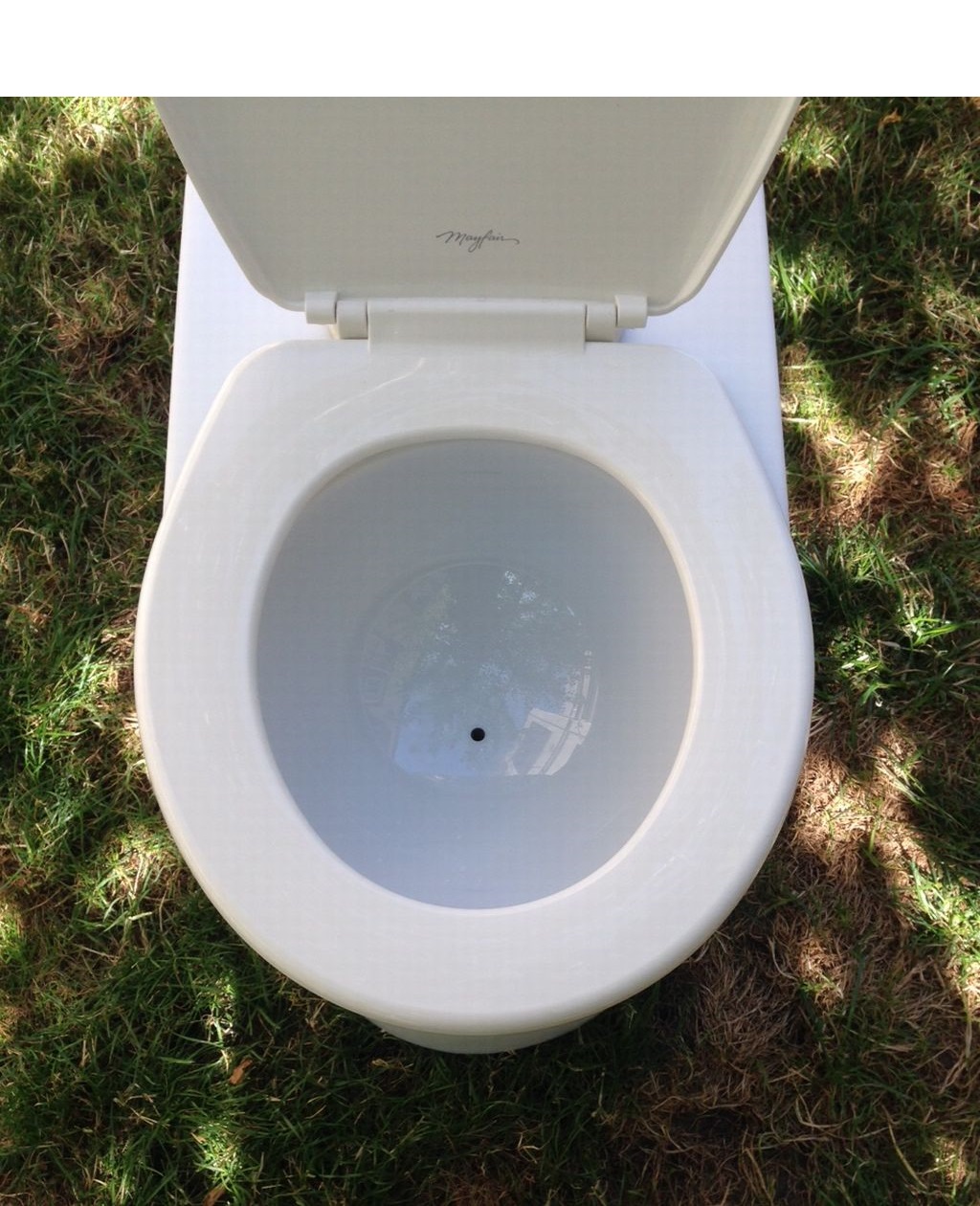 This unique urinal can be used comfortably by both men and women. It requires only a few ounces of water per day to rinse and fill up the p-trap. The p-trap has a capacity of approximately 2 ounces and when filled with water no odor from the urine storage area can migrate into the urinal.
The urinal can be plumed into a building’s conventional plumbing system or the urine could be stored for use as a fertilizer. Urine is transferred from the unit to your desired location via ½” diameter plastic tubing.
Urine contains 80% of the nutrients needed to grow a persons food and it can easily be used as a fertilizer by diluting it with water (about 8 parts water 1 part urine). In the temperate geographic zones urine is almost always pathogen free. A single person produces about 100 gallons of urine a year, on average.
If the urine is to composted aerobically it must be mixed with dry material. If a compost pile is wet and gooey air cannot penetrate into the pile and the compost will be anaerobic. Limiting the quantity of liquid added to a composting toilet will result in substantially less dry material being needed. This will also allow the volumetric size of the composter to be reduced considerably. Some composting toilets manage the excess liquid with a leach field. This liquid typically circulates through the solids increasing the possibility of spreading pathogens. In addition the nutrients in this liquid are not recycled.
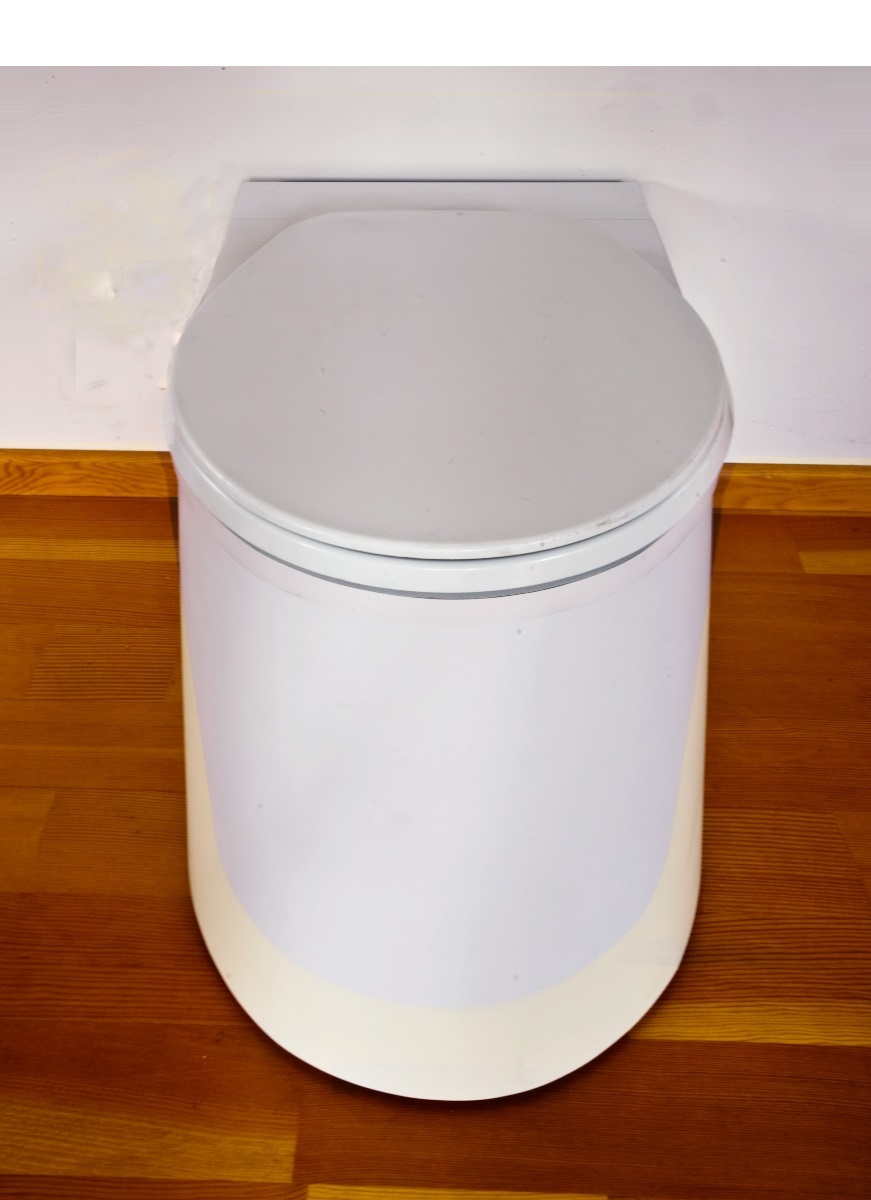
Replacing a conventional toilet with a waterless urinal, that is plumed into a conventional waste system, will save a considerable amount of water. Typically this amounts to about 3,000 gallons of water, per year, per person.
Sun Frost dev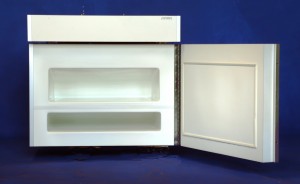 eloped a hybrid refrigerator/ice pack freezer, the FRH-3. The Sun Frost FRH-3 has a SDD freezer and a battery powered refrigerator. The SDD freezer is the same size as our F-1 (http://www.sunfrost.com/batteryless_direct_drive_freezer.html) and incorporates the same technology which allows the freezer to operate at low levels of insolation. The F-1 has been successfully tested in Colombia this past year. Testing was supported by the BMG Foundation. The refrigerator has a net storage capacity of 32 liters and is battery powered. The refrigerator compartment is extremely efficient at 32 deg C, it consumes only 96 watt hours/day or 8 amp hours/day at 12 volts. The FRH-3 can be powered by two 140 watt module’s at any location in the tropics. The cooling systems are independent and one module will be connected to each cooling system.
A 140 watt module will provide enough energy to run the refrigerator section with only 1 KWH/m^2/day. At poor solar locations in the tropics levels of insolation at or below 1 KWH/m^2/day may occur once or twice a year. This is based on the examination of many years of data on the WRDC data base (http://wrdc-mgo.nrel.gov/). We primarily looked at locations with low levels of insolation. At this level of energy consumption for 363 days per year the battery will have to supply only 4 amp hours/day to keep the refrigerator operating at night. For one or two days per year the load will be 8 amp hours.
In terms of the Autonomy Tool the array oversize factor will be at least 3.5; an array oversize factor of 1.25 is all that has been required by WHO. Using a larger oversize factor greatly reduces the necessary storage capacity of the battery and also reduces the amount the battery is discharged.
In a conventional battery powered combination unit the freezer is also battery powered. The freezer is a major part of the load, and this load could vary considerably depending on the quantity of ice manufactured. Eliminating the freezer load significantly reduces the amp hour draw on the batteries. In addition the efficiency of the refrigerator was increased by incorporating a newly developed evaporator.
A battery as small as 40 amp hours would typically be cycled only 10% each day; each night 4 amp hours will be used to keep the refrigerator operating. The expected life of a battery is highly dependent on the percent discharged. Data for MK Battery DEKA gel cell shows that the cycle life of a battery increases from 600 cycles to 6000 cycles as the percent discharged decreases from 80% to 10%. We expect the life of a high quality battery to be at least 10 years. If the battery is replaced by a lower quality locally available battery in this shallow cycle application we expect the life of the battery to be at least 3 years. A 40 amp hour battery is about the size of a small car battery. Loss of battery capacity is typical mode of failure for a battery, however, even if a 40 amp hour battery loses 80% of its capacity it will continue to operate the refrigerator.
Advantages of a Hybrid System:
– System is sized to operate at any location in the tropics. Sizing is typically a problem with SDD refrigerators. From the PQS Sheets “For solar direct drive units, the correct sizing of the solar panel array for a specific site is complex and critical. It must be agreed with both the appliance manufacturer and with the Qualified Supplier of the solar energy system at the time of ordering.”
– The system will be considerably less expensive than an SDD refrigerator/freezer. In a poor solar location the savings could be as much as 40%.
– The refrigerator and power system will be smaller and easier to transport than a SDD refrigerator/freezer.
– Connection will be plug and play.
– Since the panel powering the refrigerator is significantly oversized the battery will typically be full early in the day. Excess power could than be used to power a second battery which could be used for lights or cell phone charging, etc. Typically 24 amp hours or 288 watt hours will be available for other applications. This could light eight 5 watt LEDs (40 watt incandescent equivalent) for 7 hours each day.
– In emergency situations where a spare battery is needed the auxiliary battery could be used to run the refrigerator. A spare battery will then always be available.
Cooking is a highly inefficient process whether it’s done in the developing world or in a modern home. If you’re cooking a meal and also heating up your kitchen is a good indicator of the inefficiency of the process. Your stove is then operating more as a room heater than a cooking device.
A Basic Human Need:
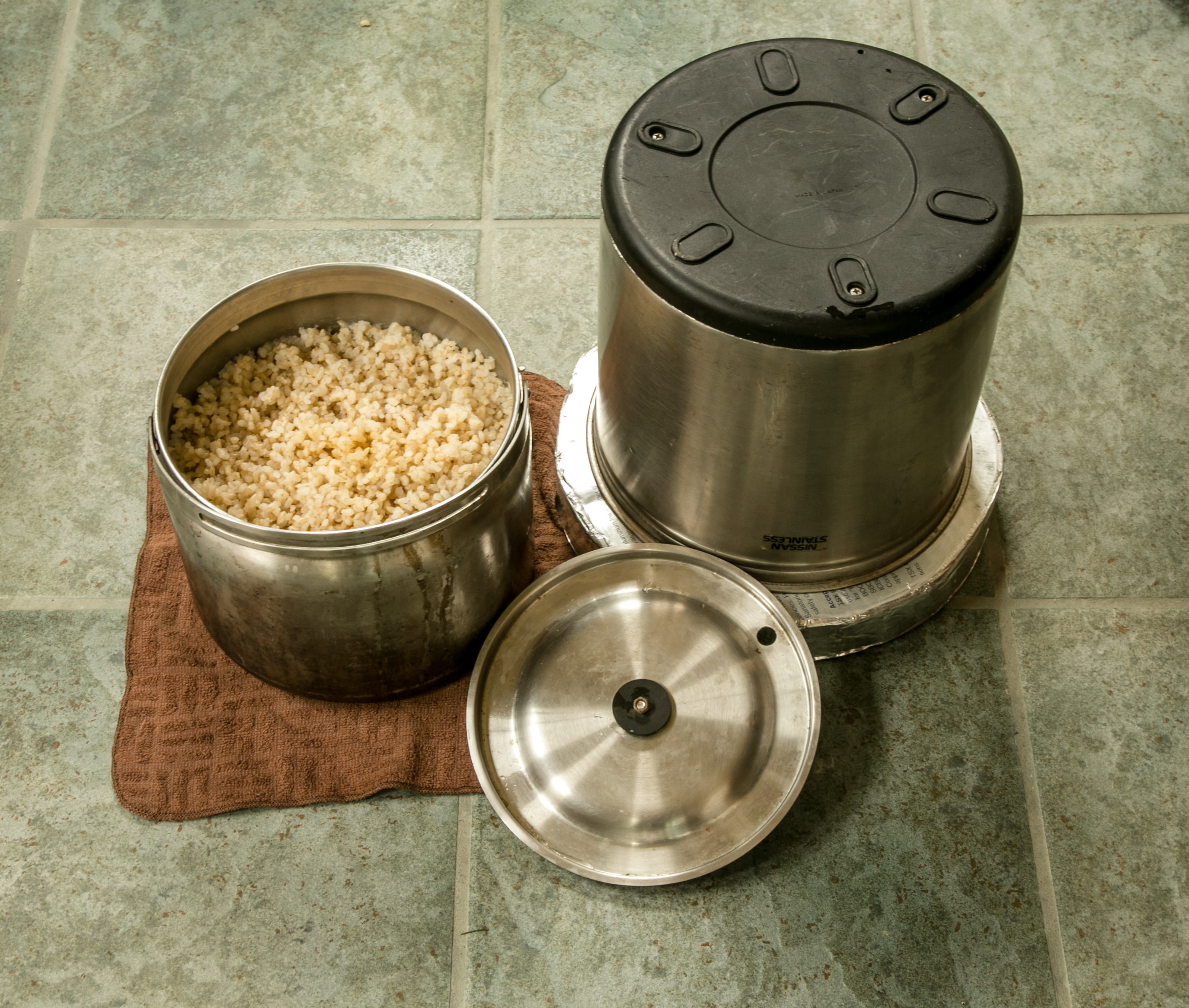
Rice & Insulated Cover
The goal of this project was to cook a meal with as little wood as possible. Cooking is a basic human need; however, little work has been done on how to make this process truly efficient. I estimated that people consume about 5 lbs of hot food per day. Heating this food from room temperature to boiling if done with 100% efficiency requires only 700 BTUs, or 200 watt hours, this is the amount of energy in 1.5 oz of wood. This energy could also be supplied by a 50 watt solar module on a typical solar day. Even if this process were only an assumed 33% efficient the quantity of wood required would be only 4.5 oz, and a single 150 watt solar module could supply the required energy. The cost of PV is now about $1.00 per watt*(this does not include associated components such as a mount, wire, etc). If a baby was given a gift of a 150 watt solar module it could supply the energy he needs for cooking for the rest of his life.
Solar Hybrid Cooking:
A concept we have employed, Solar Hybrid Cooking, could reduce the energy required for cooking even further. Solar hybrid cooking (http://www.sunfrost.com/extreme_efficiency.html) incorporates 3 elements; preheating with solar, a renewable heat source to bring the liquid to boil, and an insulated container to keep the pots contents at a simmering temperature after it is removed from the stove.
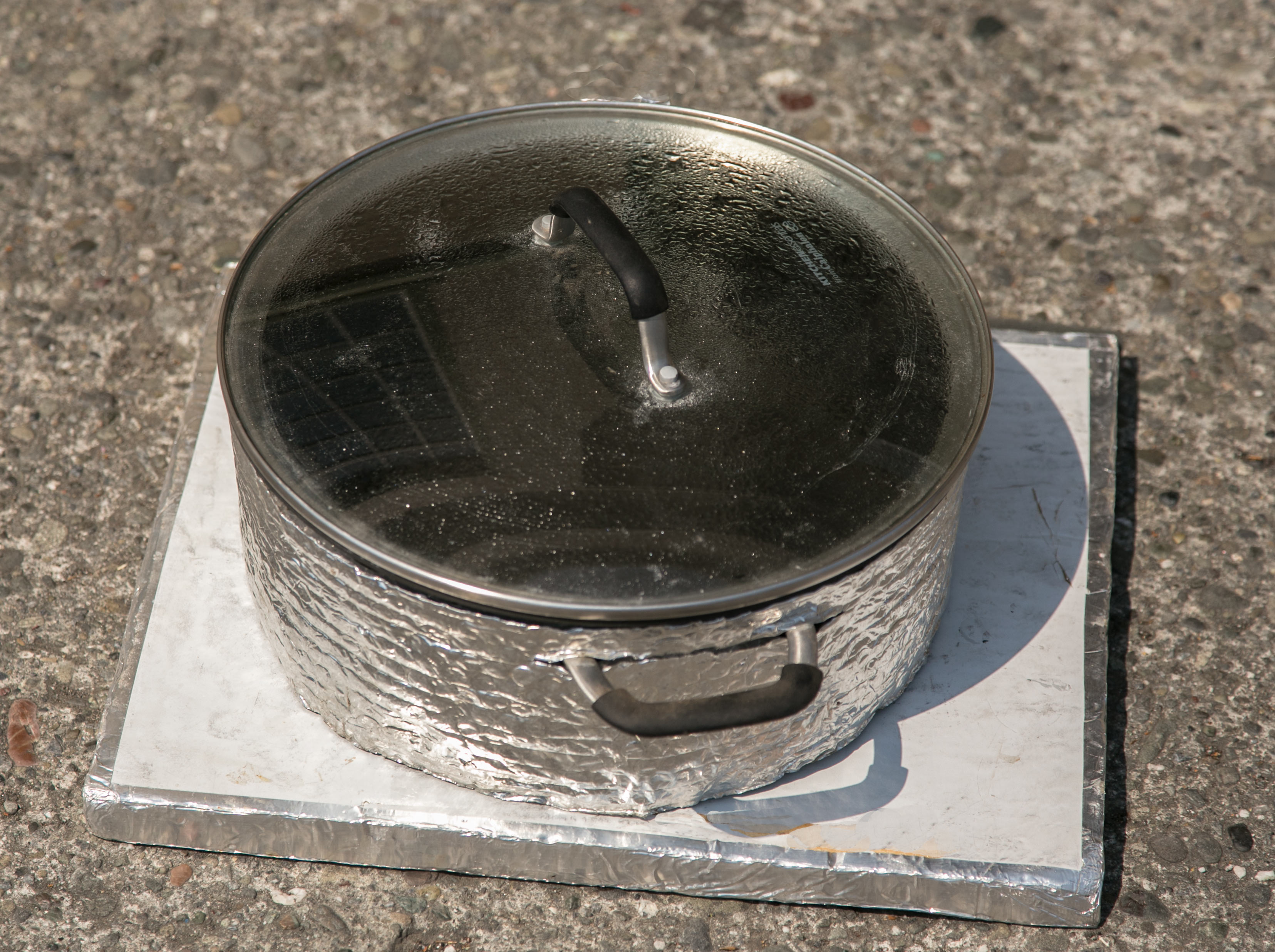
Pot used as solar preheater.
This technique for keeping the contents of the pot hot is called retained heat cooking, and the insulated container is often called a straw box cooker, since it could be made of straw. The solar preheater could incorporate sophisticated technologies like a vacuum insulated thermal panel, or simply a pot placed in the sun. For this experiment we used a retained heat cooker manufactured by “Nissan Thermos”. The 4 liter stainless steel inner pot is insulated by a double walled evacuated container. It is similar in design to many insulated coffee mugs. Since the insulated container is metal and heat resistant we could use it to insulate the rice while it cooked.
This technique could be applied in developing countries or in the developed world. When I built my home 9 years ago, a zero energy home (http://www.sunfrost.com/extreme_efficiency.html), I applied this technique. Water is preheated by flat plate solar panels and the hot water is stored in a drain back insulated tank. A heat exchanger at the top of the tank collects the hottest water; it is then plumbed to the dedicated faucet at the kitchen sink. A 1/4“ copper tube minimizes heat loss and the time to receive the first burst of hot water. The electric burners are powered by a grid tied electric system.
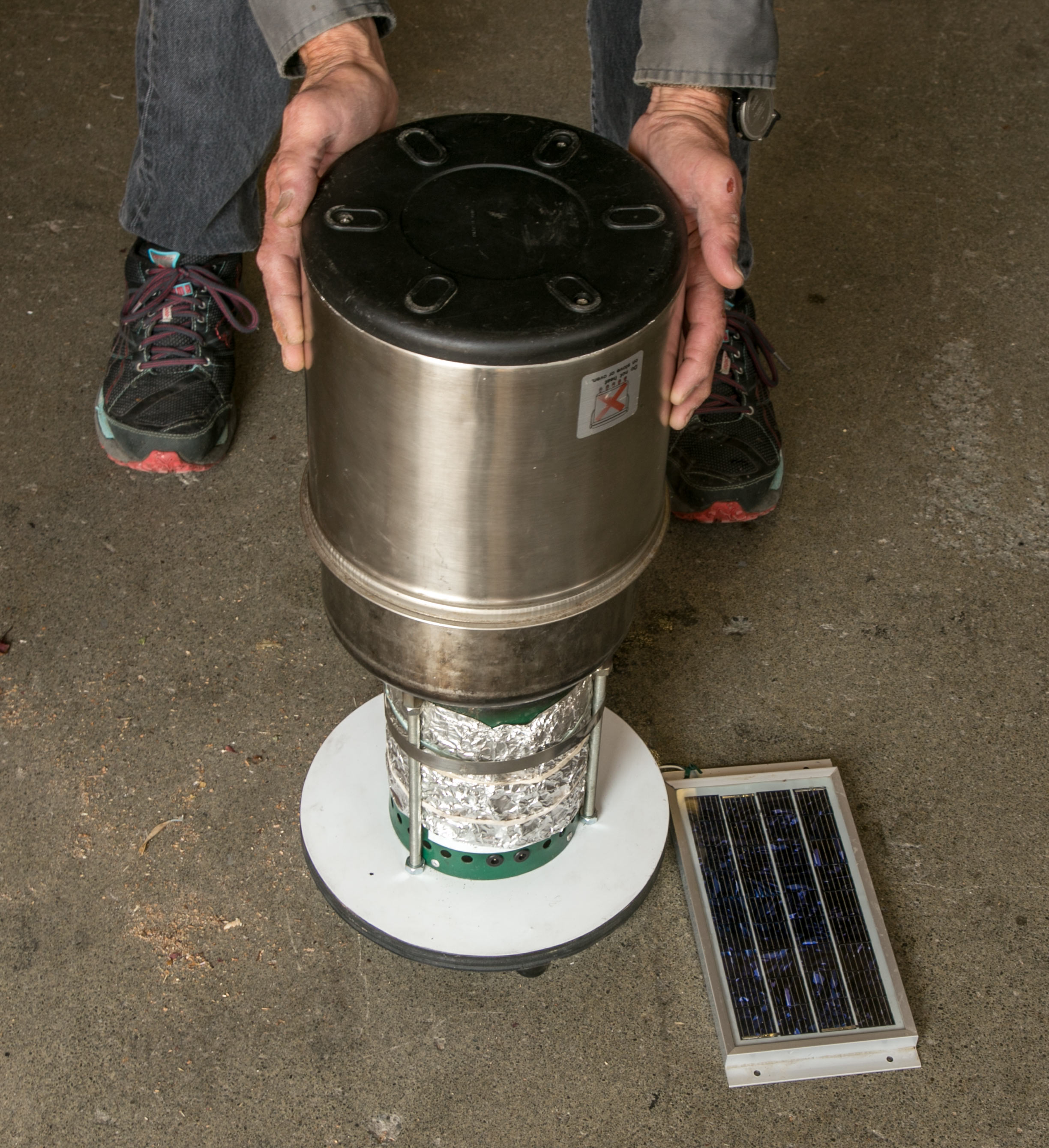
Wood gas stove with insulated pot. PV for fan on right.
Testing:
We applied our solar hybrid-cooking techniques to see how little wood we could use to cook a days worth of food. We assumed the average person consumes about 2400 Kcal per day. To simplify the experiment we also assumed 4 people in a family and 4 dishes were cooked per day and that each dish contained 2400 Kcal.
We cooked a 2400 Kcal brown rice dish using our solar hybrid cooking techniques and measured the quantity of wood needed. Four cups of brown rice and 8 cups of water provide a days worth of calories, and 48 grams of protein.
For a solar preheater we used a 12 inch diameter pot with a glass cover, to preheat the rice water mixture to 117 F, a temperature which would be easily achievable in a developing nation. The pot sat on a piece of foam insulation and the sides of the pot were insulated with “reflectix” insulation.
The rice was then heated to boiling temperature on a “wood gas” stove. This stove is highly efficient and is commercially available. It incorporates a small fan which consumed ½ watt or less. The fan can be powered by a battery or a small solar panel. With a solar panel powering the fan the fan speed can easily be adjusted by partially covering the panel.
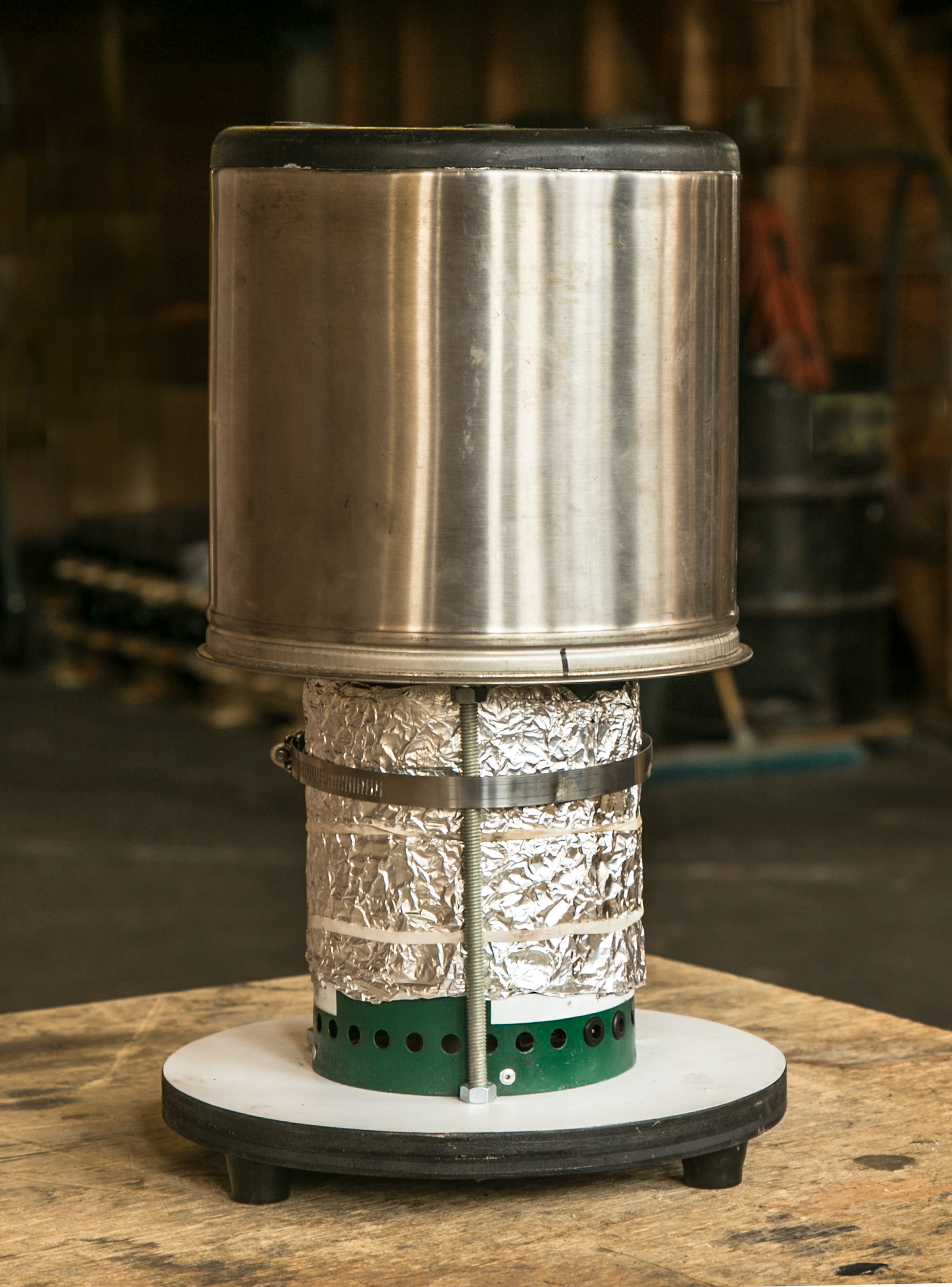
Wood gas stove with insulated pot. Foil provides additional insulation for the combustion chamber.
We removed the plastic parts from the Nissan container so it could be placed over the pot while cooking. This reduced heat losses from the pot to a negligible amount. With this technique we were able to cook efficiently even under breezy conditions.
After the rice came to a boil we placed the pot on a piece of foil covered polyurethane insulation. We placed ½” tall spacers under the pot so that it was not sitting directly on the foam insulation. When the direction of heat flow is downward a horizontal air space is good insulation. Hot air rises so there is no convection in this space. Radiation heat transfer can easily be suppressed with aluminum foil on one of the surfaces and heat conduction through the air can make a relatively small contribution. When using a retained heat cooker it is more efficient to place the cover over the pot so there are no convective losses from seals in the top cover. We had perfectly cooked rice about 40 minutes later, the rice stayed hot enough for serving for several hours.
Results:

Wood required to cook a days worth of calories.
This cooking process only required 3.8 oz (106 grams) of wood. This is a very small amount of wood, however there is considerable room for improvement since the process was only 26% efficient. If we eliminated the preheating and started with 70F water about 5.6 oz of wood would be required.
We also tested this cooking technique using a standard cooking test for small wood stoves. In this test 1 liter of 70 F water is heated to boiling, the water is then kept at a simmering temperature for ½ hour. In this test we started with 70F water, it was not preheated. With the insulating cover no additional heat was needed to keep the water at a simmering temperature. We compared our test results to those presented in a summary paper where (link from Dan) 5 other stoves were tested. Our cooking technique used about half the energy consumed by the next best stove. These stoves did not incorporate an insulated pot or retained heat cooking. A “3 rock” open fire required about 5 times more energy. With solar preheating the energy consumed could have been further reduced.
We are looking into how the insulated stainless steel container could be used to produce a highly efficient oven.
The solar hybrid concept can be used in the developing world, and also in developed countries. It not only saves energy but also provides additional amenities. We hope it finds wider application.
If you live off the grid and need a refrigerator the two most common choices are Electric or Propane. Sun Frost manufactures high efficient electric refrigerators which are an excellent alternative for off grid homes. They can be powered by either AC or DC power.
Solar Power System
The DC models can be powered by 12 V or 24 V batteries. One 100 amp hr 12V deep cycle battery will typically run the Sun Frost RF12 for 3 days without recharging. If a generator is run periodically it could keep the batteries fully charged or the battery could be kept charged by a single 135 watt Photovoltaic (PV) panel. A PV Panel is essentially a battery charger; the 135 watt module produces 7.7 amps in full sun. The panel will provide the energy needed to run the refrigerator with about 4 hours of direct sunlight. On a cloudy day you will still get about 4 hours of equivalent sunlight, but over the whole day. On rainy days part of the energy required would be provided by solar and part by the battery. In the northern states in mid winter there may not be enough sunlight (insolation) to keep the refrigerator running. Under these conditions the batteries could be topped off with a generator, or the refrigerator could be kept in a cool location to lower the energy consumption. In a sunny state like Colorado a 135 watt module will supply energy and keep the refrigerator running all year.
A DC solar electric system is fairly simple, the key components are the solar panels, batteries, and charge controller. The charge controller keeps the batteries from being over charged and also shuts off the load to keep the batteries from being totally discharged.
Cabin Sized Solar System:
If you live off the grid you may find it highly desirable to expand the solar array to a 2 panel system and to add an extra battery. This system can provide enough energy to operate a refrigerator, lights, stereo system, cell phone/computer charging, and a television/entertainment system. The extra energy collected will typically be about 28 amp hours or 336 watt hours (28 amp hours * 12 hours). This is enough energy to run 6 10 watt LED’s for 5.5 hours. The light output of a 10 watt LED is equivalent to the output of a 60 watt incandescent. Except for the batteries, the refrigerator and solar array should provide 25 years of trouble free operation. Good quality batteries will last about 8 years.
The Propane Alternative:
 A propane refrigerator uses what is called an absorption process to cool the refrigerator. This process is powered by heat. The heat can either be produced electrically or by combustion.
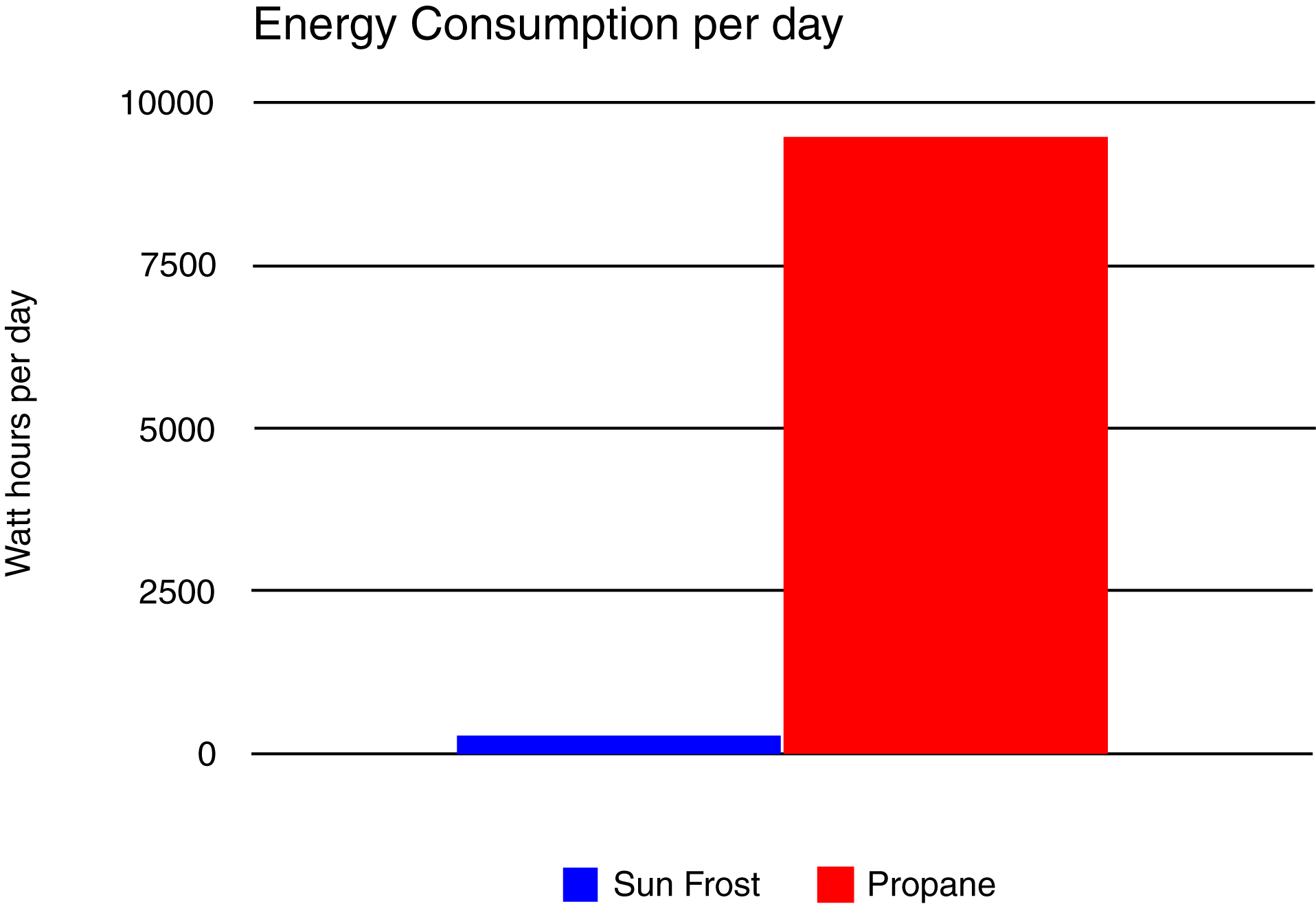
A 10 cubic foot propane refrigerator will typically consume 1.5 lbs, or .375 gallons, of propane per day. The energy content of 1.5 lbs of propane is 32,250 Btu or about 9485 watt hours. The Sun Frost RF12 consumes only 24 amps hours a day, which is equivalent to 288 watt hours a day. That is an astounding 32 times less.
Advantages of Going Electric: Longevity, Safety, & Fire Danger
From the information we are collecting new propane refrigerators last 6 to 12 years. Sun Frost refrigerators have proven themselves to last 25 years or more. The old Servels made in the 1950s could last 50 years or more. However, they are currently being recalled because of dust and rust, often keeps the burners from burning cleanly. As a result they produce carbon monoxide and are responsible for 22 deaths according to the US Consumer Products Safety commission. The new Servels are connected to older models in name only. On newer propane refrigerator the burner area still requires periodic cleaning and flame inspection. Inspection may be difficult if the refrigerator is plumbed against a wall.
Even if the flame is burning cleanly it is consuming oxygen and producing heat, carbon dioxide and water vapor. In Canada, as a consequence of colder conditions, houses are built tighter; and propane refrigerators are required to have a direct outside air supply and exhaust. This is a requirement in all providences except Ontario where a carbon monoxide detector with an automatic gas shut off is required. When propane refrigerators are used in RVs for safety considerations the American Gas Association recommends turning a propane refrigerator off when traveling down the road.
There are about 3000 RV Fires per year and many can be traced to the refrigerator. Even if the fire was not started by the refrigerator its venting system can add air to the fire and accelerate its spreading.
The two major manufactures of propane refrigerators have had many recalls. The recalls typically involve cracks in the cooling system near the area of combustion. The cooling systems contain ammonia and hydrogen, both are combustible. Although the cooling will still operate when the unit is not level, the internal pressure of a unit is higher when the refrigerator is not level. The refrigerator will not always be level while driving, exasperating the leakage problem.
Manufacturers recommend that rugs and flammable materials be kept away from the burner. RV enthusiasts will be glad to know with a Sun Frost performance is not sacrificed if the vehicle is not level.
As a consequence of the inefficiency, a propane refrigerator produces a considerable amount of heat. Typically a 10 c.f. unvented propane refrigerator produces the same amount of heat as a 1000 watt heater running 9.5 hours per day. While this may be appreciated in the winter, come summer your hot kitchen will only become more uncomfortable.
Cost:
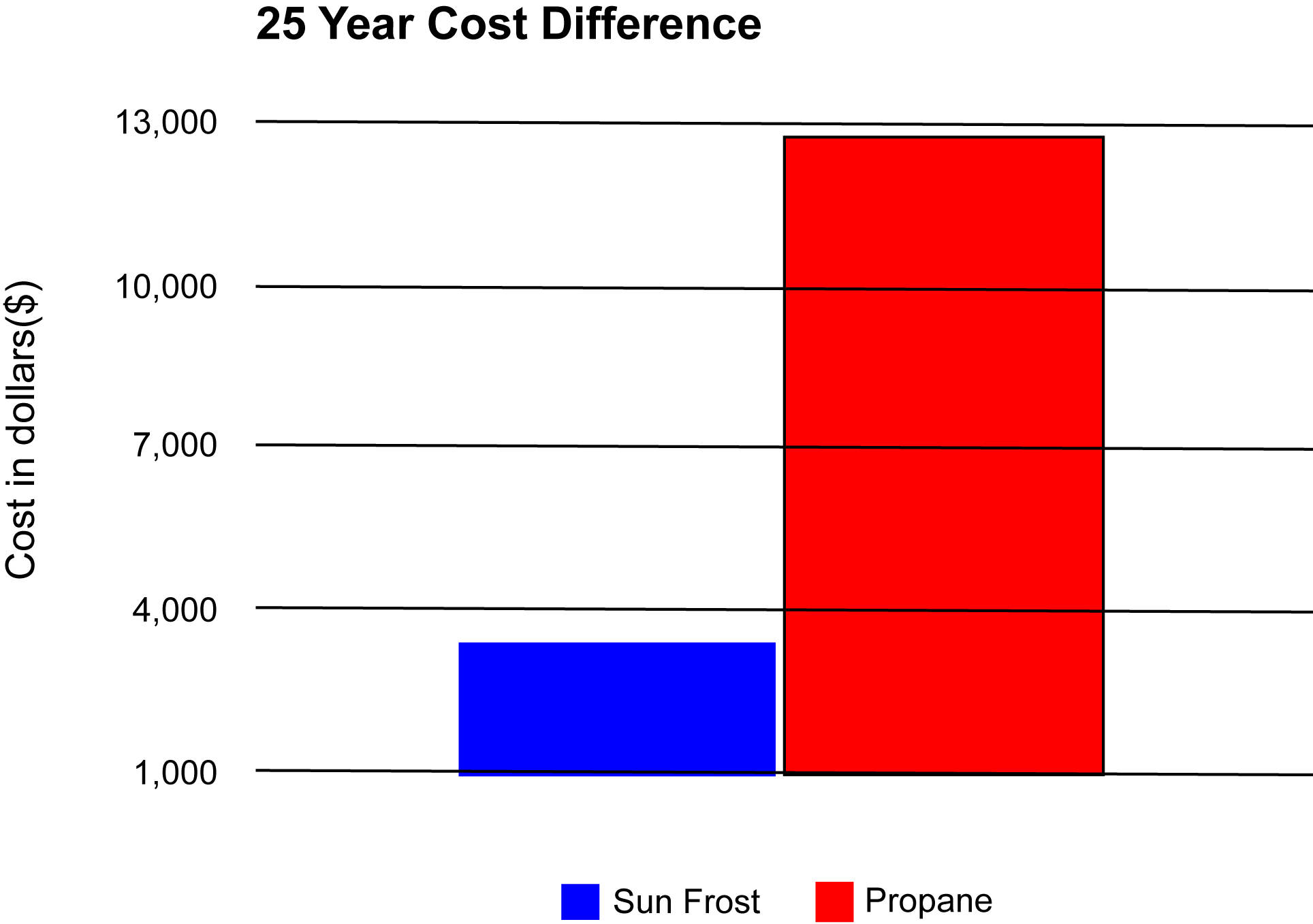 When considering all the costs to keep a refrigerator running 25 years a solar powered Sun Frost costs about 3.7 times less. Over 25 years the total system cost for a Sun Frost would be about $3,456, including the cost of the solar system, refrigerator and replacement batteries. High quality batteries will need to be replaced every 8 years.
The total running cost of the propane powered system over 25 years is about $12,800. This includes the refrigerator replacement after 12.5 years. This is a generous estimate for a new propane refrigerators longevity. We assumed the cost of propane to be only $3.00 per gallon, a cost which at times has escalated to $6.00 per gallon.
The total savings over 25 years with a solar powered Sun Frost is $9,300. When considering safety, longevity, maintenance, product quality, carbon footprint and cost a Sun Frost is a clear winner.
Simple Secrets to Fruit Storage
 Last year a friend who has a small orchard purchased a used 25 year old Sun Frost. The 10 c.f. refrigerator was originally designed for storing berries at temperatures near 32 F.
Last October he filled it with apples. A week ago he pulled out the last apple. After 8 months the apple was crisp and tasty. The pattern on the surface of the apple is commonly seen on Myra Fuji apples.
 The keys to long term storage are temperatures near 32 F and high humidity. Sun Frosts do an excellent job of providing both these conditions.
Dog Manure Composter
 Dog manure, like other types of manure, is compostable. We recently built a composter for dog manure, which we donated to a local shelter. The compost barrels used in our CS Composting Toilet make excellent composters for dog manure. Our manager has experimented with composting dog manure and was amazed at how the odor disappeared when he added a small amount of saw dust. Food scraps could also be added to the compost. This will give the microbes a variety of nutrients and aid the composting process.
Making aerobic compost requires warmth, air and the correct moisture content. The barrels are insulated to contain the heat generated during the composting process. They are also ventilated so the moisture produced by the respiration microbes can easily leave the composter. Adding a small amount of saw dust is all that is necessary to control the moisture level. If the compost gets too wet, air cannot penetrate into the pile and it goes anaerobic. Anaerobic compost smells and attracts flies. Mixing is accomplished by a stainless steel cork screw type mixer used on our other composters; it is easy to use and highly effective.
 One of the primary agents for disease from dog manure is Roundworm. They are killed at relatively low temperatures over several days at 104 deg F or an hour at 122 deg F.*
The temperature of the compost can be raised to over 122 deg F by adding about 10 pounds of unbleached flour to a fairly full drum of compost. The flour acts as fast food to the microbes.
Composting dog manure transforms dog manure from a waste product to an effective soil amendment and also eliminates the nasty odors produced when it sits in a garbage can.
* Composting Dog Waste; USDA; December 2005.
I recently finished the latest of our “Energy Efficient Shower” See link for theory of operation: 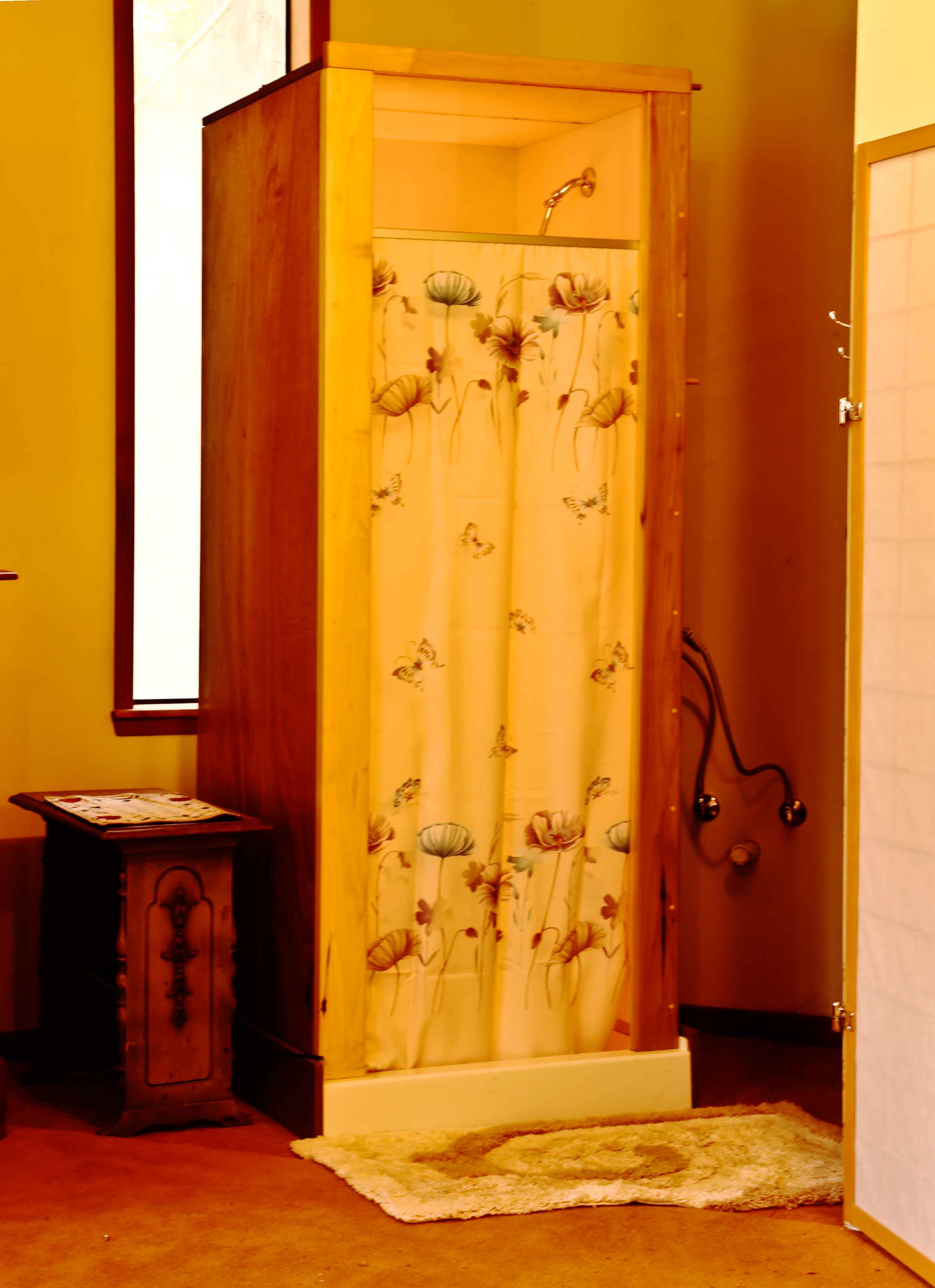 http://www.sunfrost.com/efficient_shower.html The enclosed design of the shower worked well in the installed space, it eliminated the need for adding an exhaust system to the room, or the need to heat the space. The room it’s located in is seldom above 60 deg F.
Construction
The shower is made of what may be called “SIPS” panels. The panels were made out of 1” extruded polystyrene sandwiched between two sheets of 1/8” plywood. The inside surfaces were covered with high pressure laminate. The base of the shower is a 32” square standard shower pan. The bottom of the walls are covered with aluminum angle to assure that no moisture penetrates into the edge grain of the plywood or laminate.
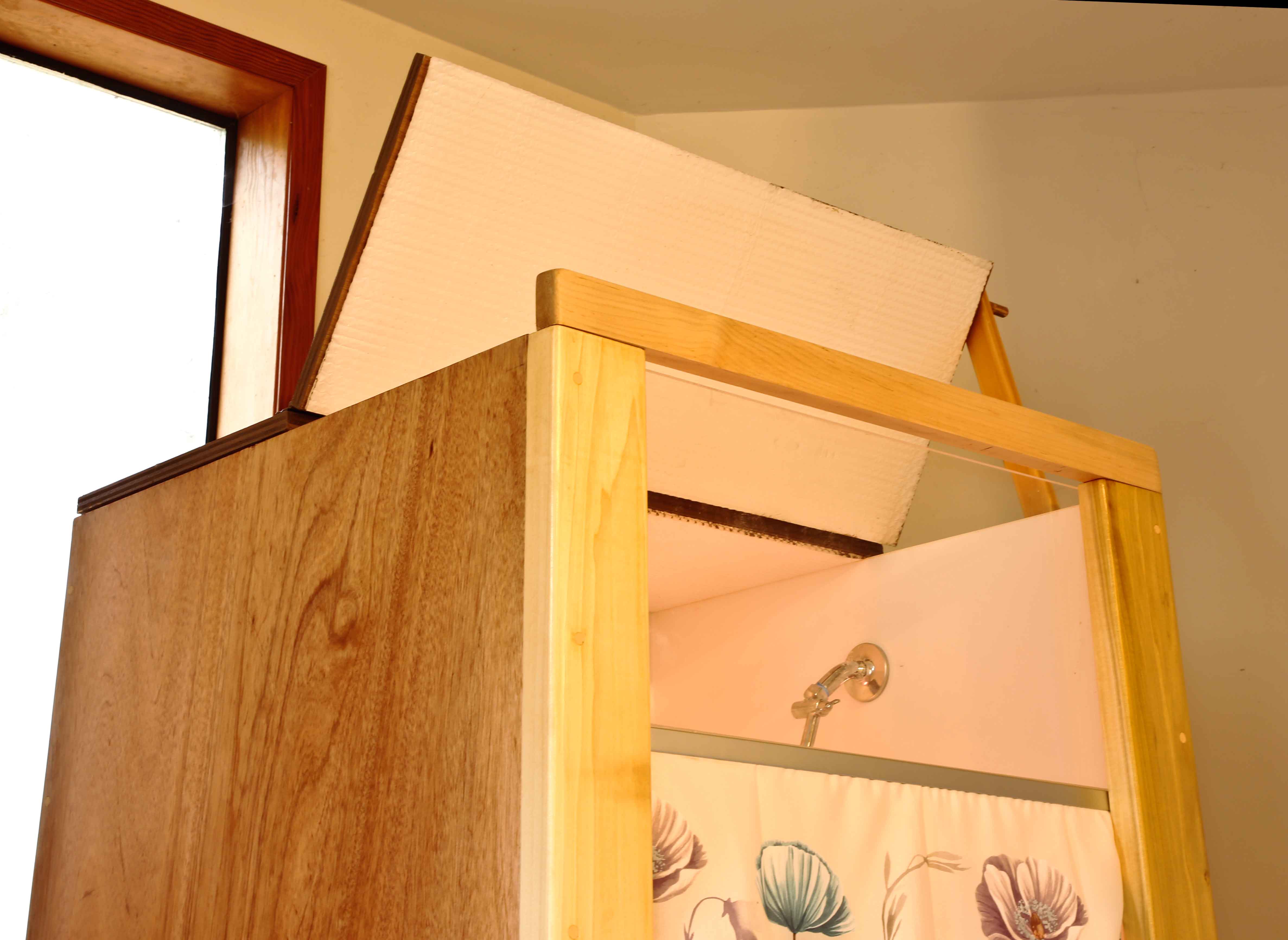 The doorway is framed by a wood structure. The curtain hangs below a 3/8” piece of clear “Plexiglas” Two magnets lie behind the fiberglass base. The bottom corners of the curtain are held taught by another set of magnets. Two layers of curtain material give a bit of extra insulation.
The ceiling of the shower is covered with heavy duty “Reflectix”. About 1/3 of the ceiling opens to ventilate when finished showering.
Performance
The shower is extremely comfortable to use, it is located several feet from a hot water heater so hot water is provided almost instantly. In a 60 deg F room what feels like a very warm shower can be taken with 98 deg F water. Entrance water to typical showers is about 110 deg F. Water flow rate of one gallon/minute feels generous. If desired the flow could be reduced to ½ gallon/minute without reducing thermal comfort.
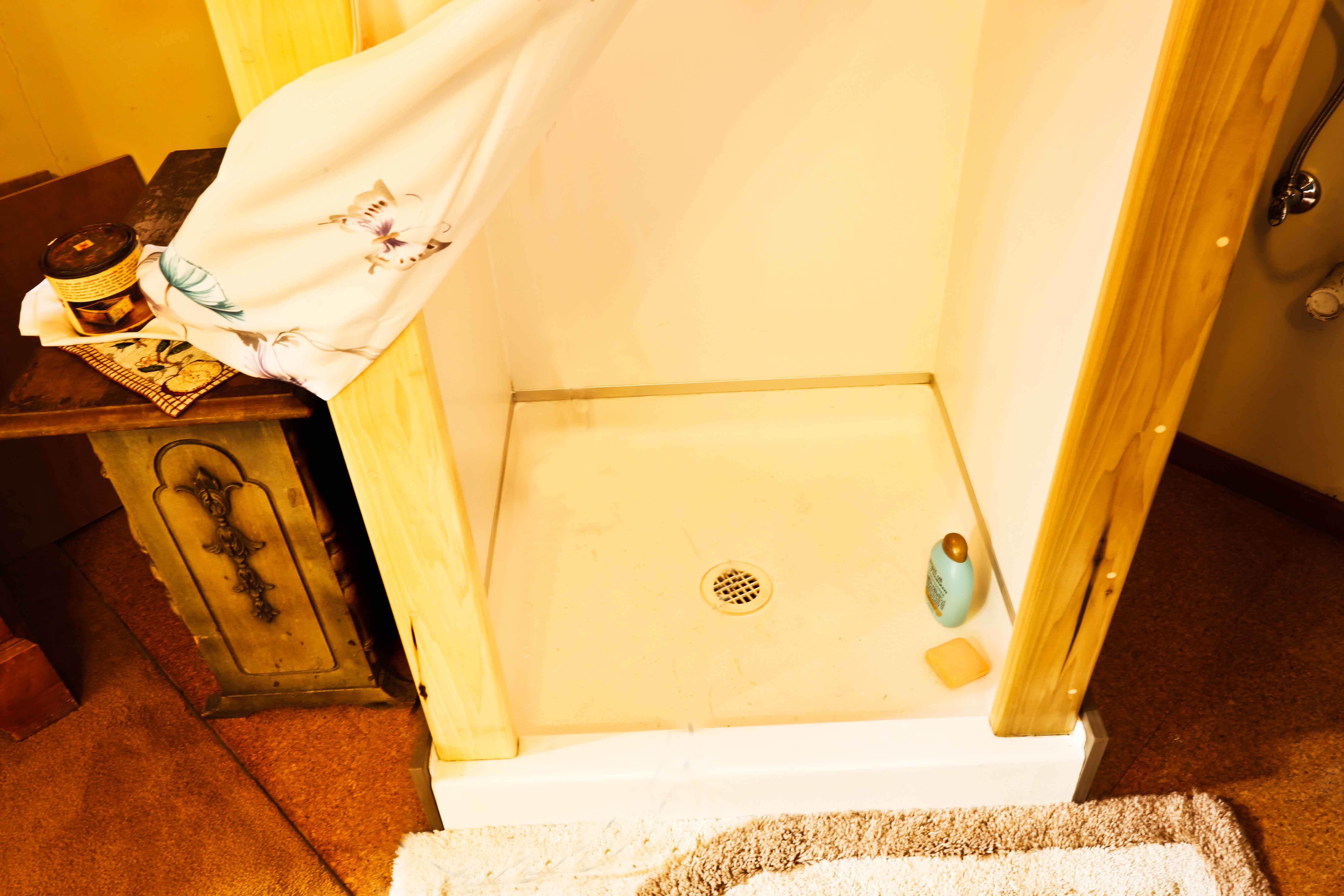 The temperature drop from the shower head to the floor was only about 1 deg F. Temperatures drops measured in a typical shower are about 22 deg F. Knowing the flow rate and temperature drop the amount of moisture evaporated into the bathroom air can be calculated.
With a 2 gallon per minute (16 pounds/minute) shower and a 22 deg F drop in water temperature the evaporated per minute cooling rate is about 550 Btu/minute. At this rate about 8 oz. of water will be evaporated per minute or for an 8 minute shower ½ gallons of moisture will be added to the air. To remove this moisture typically requires energy for ventilation and reheating of cold air to make up air during the winter. This feature is particularly valuable when mold growth is a problem and in homes which are well sealed for energy conservation.
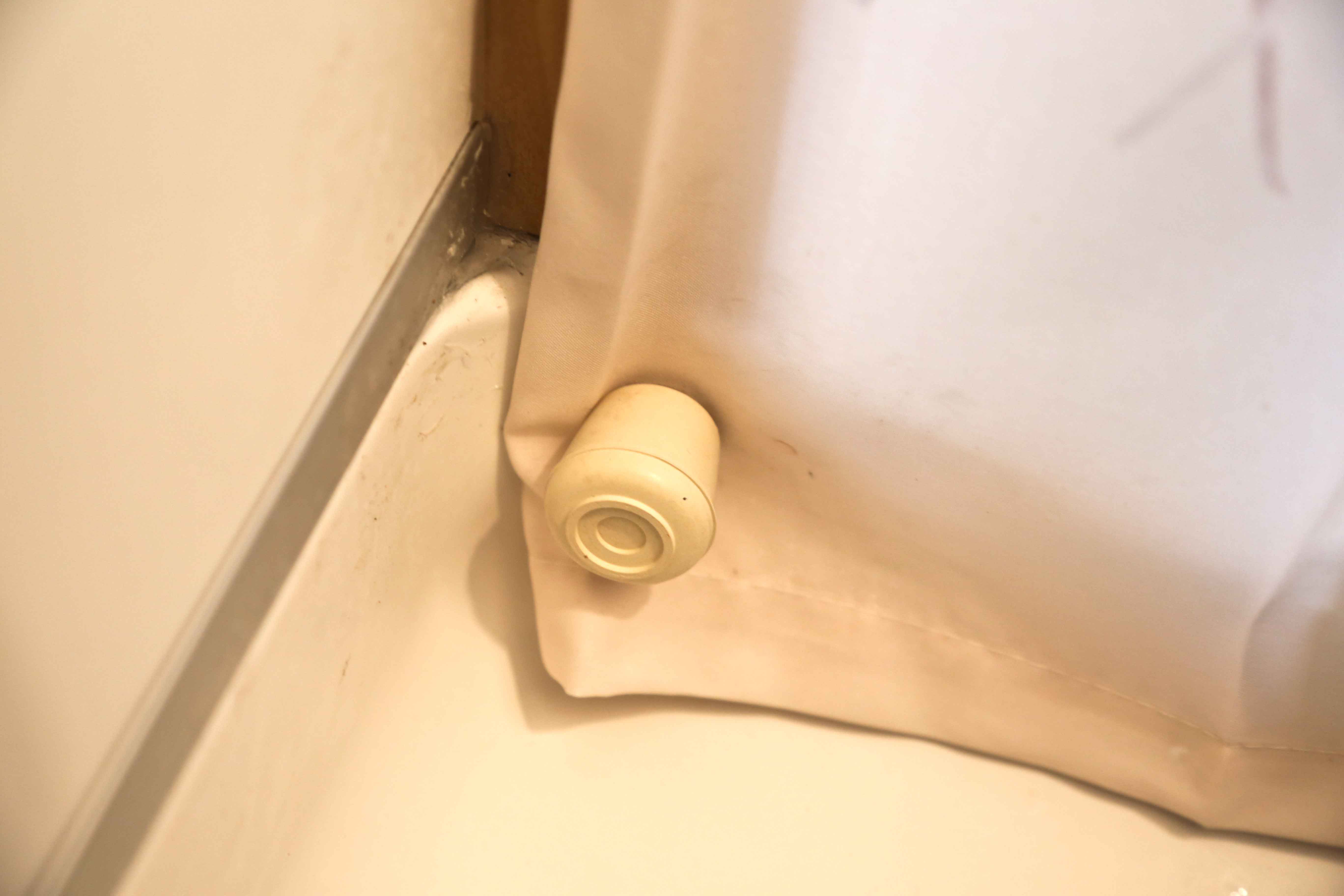 This simple redesign of the conventional shower saves energy, water, minimizes moisture problems and it also simplifies a homes ventilation system.
For more variations on this design see the ASES paper describing the shower in my home: http://www.sunfrost.com/zero-energy-home.pdf
We have recently developed a new low cost composting toilet which is capable of composting all of a homes organic “waste” (really organic resources).
The Sun Frost CS composter system incorporates a sleek interior toilet and two 55 gallon batch composters outside to finish the composting process. Food scraps can be added to these composters. This increases biodiversity and actually makes the composting process more effective.
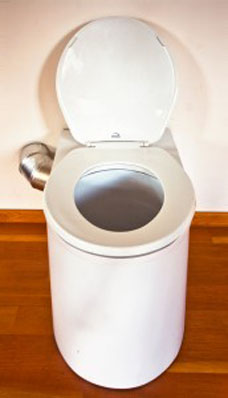
The Sun Frost CS composting system does not require a drain field or have large electrical requirements to evaporate liquids. The only electrical requirement is about 2 watts for a ventilation fan. The fan can be provided in DC for solar applications or AC for grid tied installations. Odor in the bathroom is controlled by two methods, covering the toilets contents with saw dust or peat moss and a fan powered ventilation system. Even without a ventilation system, covering the content of the toilet with sawdust has proven itself effective. For many years, a similar home built toilet system outlined in the “Humanure Handbook” effectively utilized this strategy. With the incorporated ventilation system the Sun Frost CS is even more odor free than a conventional toilet, since the odors produced while using it are expelled directly outside.
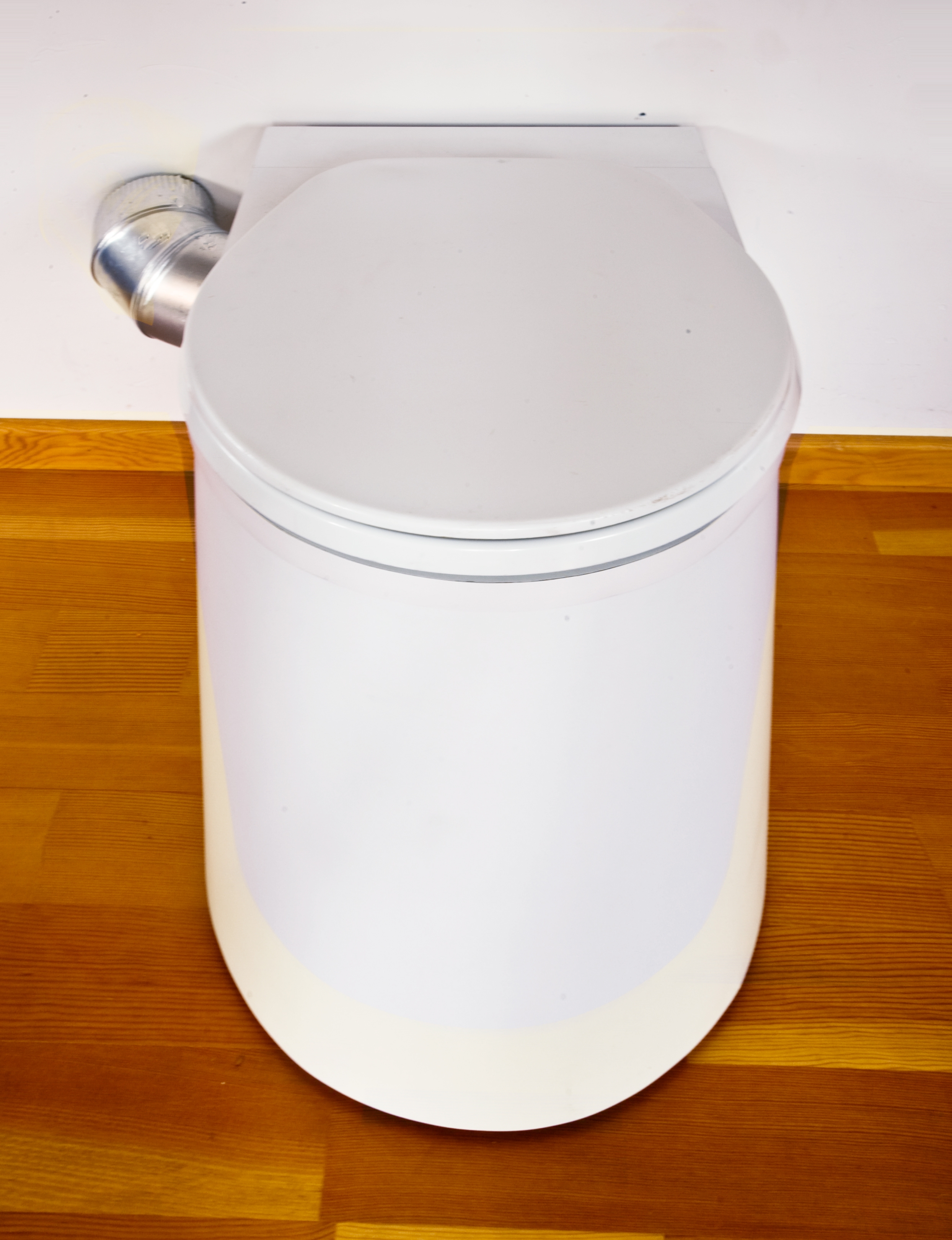 If you only use the CS toilet it will take about 1 week to fill the 5 gallon interior storage container. If only solid waste is added the toilet will take more than 2 months to fill the interior container.
With this batch composting system one exterior drum is filled while the composting process is completed in the second drum. The 55 gallon composter only requires the addition of a dry material, such as wood savings. Wood shavings are readily available in feed and pet stores. Effective composting requires aeration (mixing), proper moisture content and warmth. Mixing in the 55 gallon drum is easily carried out with the stainless steel “cork screw” type mixer provided with the kit. The exterior drums are insulated to keep the compost warm, which speeds the composting. During winter months under very cold conditions the contents of the drums could freeze. Human manure and compost can still be added to the drum, composting will continue during warmer weather. A scoop, provided with the kit, makes emptying the drums a simple matter. When emptied the contents of the drum smell and look like healthy top soil.
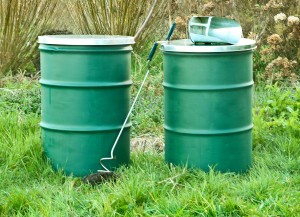 We have had the contents of these drum composters tested for fecal coli form and have found the level to be extremely low. The secret of making safer pathogen free compost is keeping the process aerobic, which is achieved by mixing and adding sufficient dry material. The open top drums for the 55 gallon composter can be obtained locally. This significantly reduces shipping costs. Included with the Sun Frost CS are insulation and insulated lids .
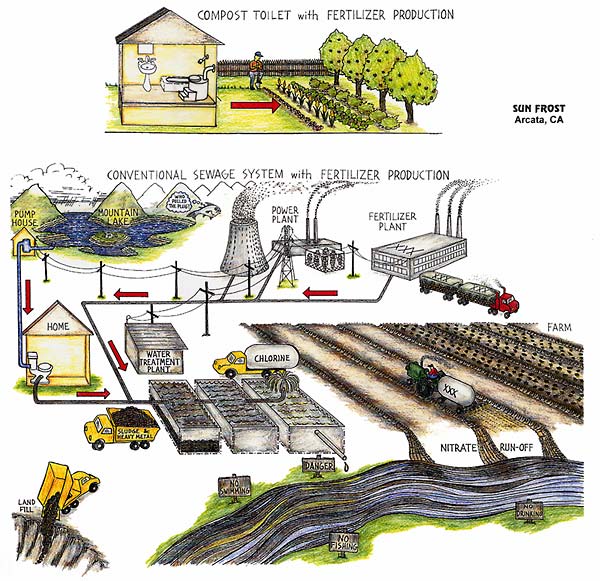 Other composting toilets with a small foot print do not provide outside composters to finish the composting process; it would be up to the home owner to provide a sheltered composter to complete the composting process. The Sun Frost CS is easily assembled and provides a convenient way to compost all of a households organic waste.
Emergency Preparedness
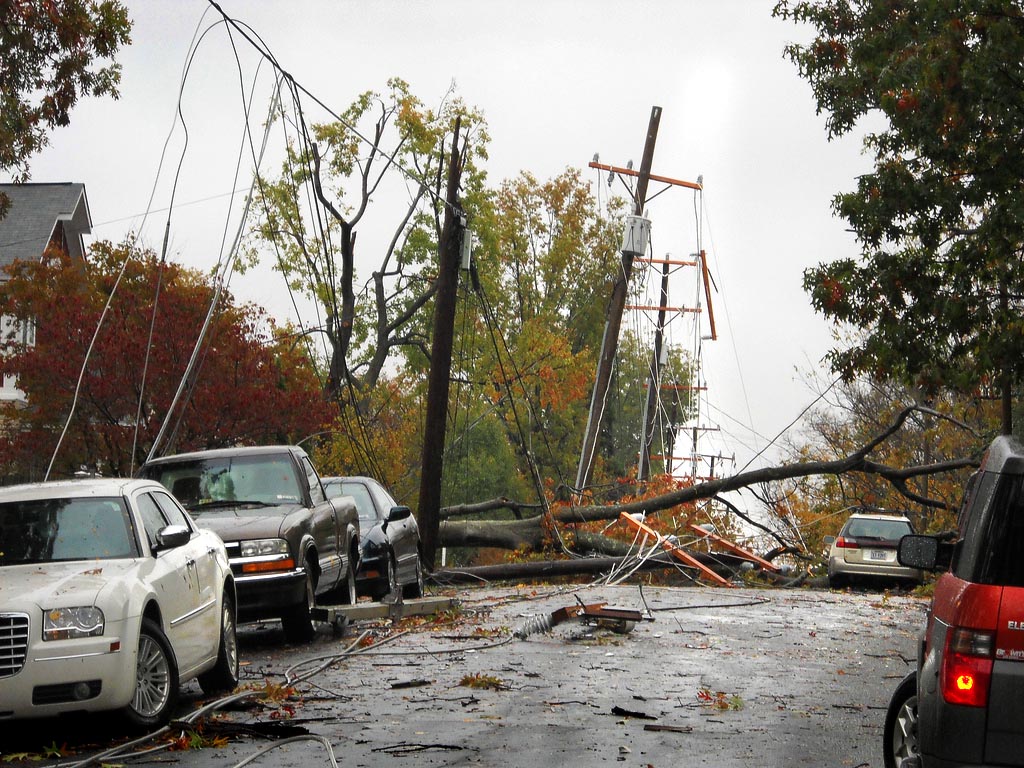 In emergencies when utility power is interrupted Sun Frost refrigerators can be configured so that they will continue to run on battery power. All of our models can be modified to run on either AC or battery power. The systems batteries can also be used to run other emergency equipment such as lights, radios or to recharge cell phones and computers. The battery bank can be sized so that it will supply sufficient power for a few days or several weeks. The batteries can be recharged when utility power is restored. For long term outages the batteries could be recharged by solar panels or a generator.
Two deep cycle batteries, the size of a large car battery, will run the RF16 for 3 to 4 days. On this model the freezer compartment can be turned off and the refrigerator left running. This would significantly reduce the RF 16’s energy consumptions and increase the number of days the refrigerator will operate. With the freezer compartment turned off two deep cycle batteries will keep the refrigerator running for about 10 days.
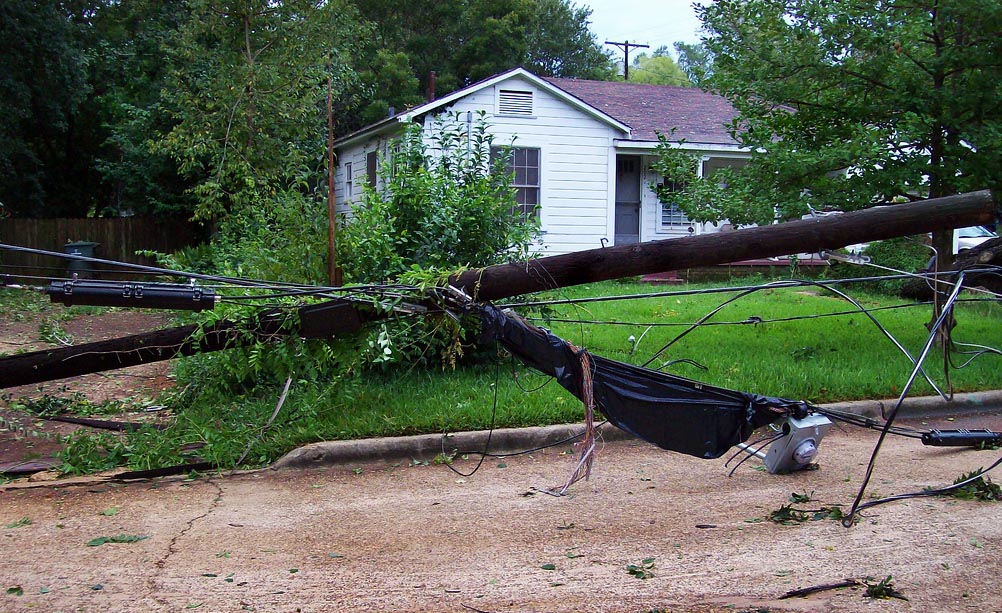
To lengthen these run times more batteries could be added or the battery could be kept charged with a solar panel. Typically a 200 watt solar panel is required to run a RF16. A 200 watt solar module is about 5 ft x 3 ft. With the freezer compartment turned off a 90 watt module is all that would be necessary.
Soil ~> Feed ~> Manure ~> Food
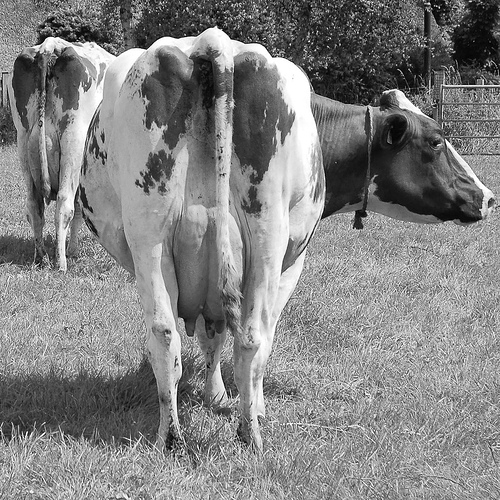 We recently sent a letter to Acres regarding their article “Healthy Soils, Healthy Livestock, Healthy People”. The letter points out the relationship between the soil used to grow feed and the quality of the manure from animals eating that feed. You can read the article here : http://www.acresusa.com/toolbox/reprints/Dec05_Craine.pdf
While reading John Ikerds’ informative article on “Healthy Soils, Healthy People”, I began to wonder what might be the connection between healthy soil and “nutrient dense” manure. If food is grown on soil deficient in micronutrients it will contain fewer micronutrients. Following the process through, the manure produced by animals consuming the food grown on depleted soil will probably be deficient in micronutrients. The manure could even be more depleted than the soil the feed crop was grown on; the animal eating the food may have absorbed the last vestiges of a particular nutrient.
Many organic farms use composted manure from conventional farms as a fertilizer. What will be the long term effect on the soils of these farms? On a macro scale does this organic source have a sustainable replacement?
Here is a reply we recently sent to the Technet21 forum. The forum primarily focuses on what is called cold chain issues.
—
Some Suggestions for control of solar gain in clinics:
Toryalai Hart had a good point, controlling the temperature of a clinic would help both the performance of the refrigerator and the occupants. Near the equator most solar gain will occur on the east/west walls and the roof. Solar heating on east and west walls could be minimized by vegetation and exterior window shades; exterior shades are more effective than interior. Over hangs are not effective on east/west windows. For a new building east/west facing windows should be minimized.
An inexpensive way to minimize heat gain though the roof is the use of a radiant barrier. A radiant barrier would be installed inside. It is either aluminum foil or aluminum coated plastic film. The principle means of heat transfer from the roof is by radiation. Convection is minor since hot air stays near the ceiling. The aluminum surface minimizes radiant heat transfer. Painting the outside roof surface and east/west walls white would also be helpful.
As Toryalai Hart points out traditional building materials produced more comfortable buildings. Poor architecture designs could produce hot conditions when outside temperatures are temperate. While effective traditional architecture could on the other hand produce temperate conditions on a hot day. It would be easier to pick an appropriate refrigerator if performance figures are based on temperature, not climate zones.
Windows are solar collectors
This is a letter of support of an atricle by Norbert M. Lechner “Choose the Low-Hanging Fruit” which appeared in the December issue of Solar Today. The premise of the article is that we are not taking advantage of the lowest cost solar options such as building orientation.
—
Hi Solar Today,

Your article on saving energy by choosing “the lowest hanging fruit” is right on. Good window design represents a large part of this low hanging fruit.
Windows can be a benefit or a detriment. They can provide adequate heat and light or they can overheat a building and/or provide a means for excessive heat loss. Incident sunlight can be controlled by a window’s size, shape, glazing, and shading devices utilized (top down bottom up shades, overhangs, light shelves, diffusers, etc.). Sky lights are similar to windows. Naturally, a skylight will receive its maximum insolation in the summer and be at minimum during winter. Zomeworks makes a reflector which reverses this situation maximizing solar gains in the winter and minimizing it during the summer. Using this strategy on single story commercial buildings, many of which are primarily used during the day, costs a small fraction of the cost of lighting with electricity produce from PV panels.
Windows are the most common and lowest costing type of solar collector. However, their potential is being overlooked by builders, Energy Star, and government regulators as of recent. Windows appropriate for passive solar heating are not eligible for Energy Star certification or federal rebates. There is opportunity for Energy Star to take into consideration the input of the solar community, but this connection has not been made. The primary stake holders influencing Energy Star are manufacturers, who up till now the have not been interested in passive solar principles. The window group at LBL provides standards for evaluating windows but there is no recognition that different window specifications may be desirable on south, east and west facing windows. Effective lobbying could transform Energy Star organization and their publicly accessible web site into an educational space for good design practices. Such a change could be highly influential.
As Norbert pointed out, many common passive solar design strategies are not promoted because the concepts are not products being sold. Window manufacturers could increase their sales and market share if they provided design services and devices which control incident sunlight and heat loss. These devices can be integrated in to a window so they are both attractive and functional.
Sincerely,
Larry Schlusser, Ph D
Sun Frost Heat Dump
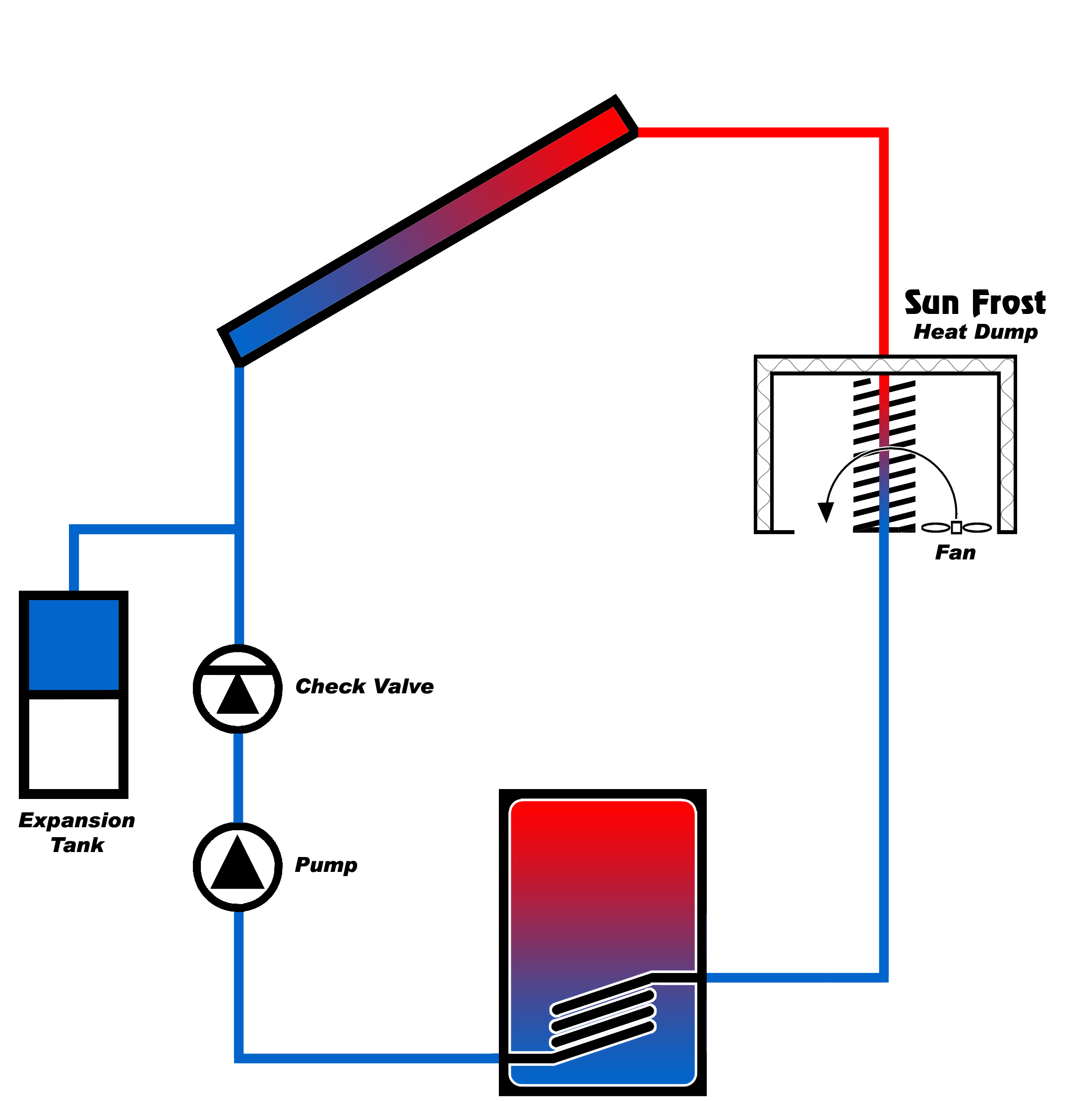
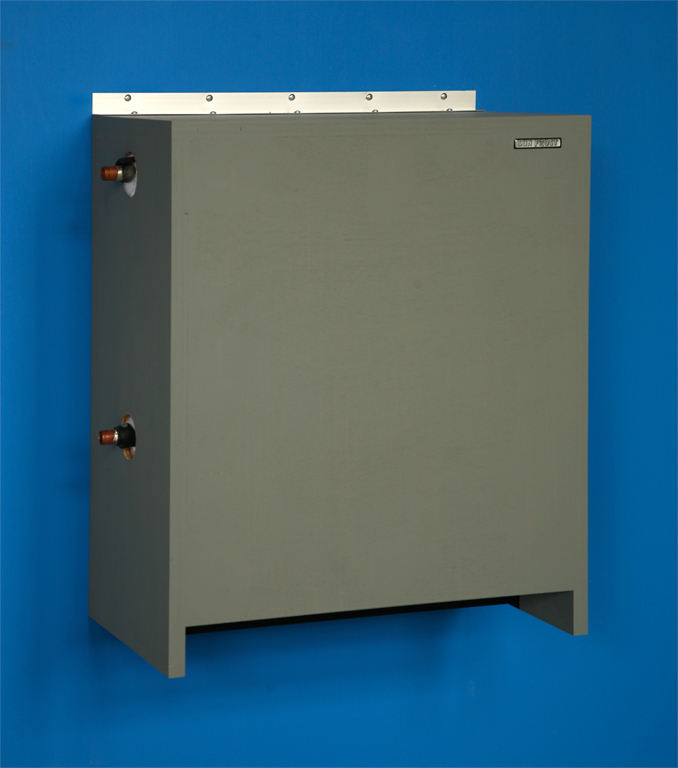 Many solar hot water systems incorporate heat transfer fluids for freeze protection. This fluid is heat sensitive. During periods of high insolation (sunlight) and low system usage, the heat transfer fluid can overheat. Overheating is a particular problem in systems which provide both domestic hot water and space heat since heat production is increased and the demand is decreased during the summer. Sun Frost has developed a simple to use device to dissipate this excess heat, the Sun Frost Heat Dump.
The Sun Frost Heat Dump incorporates a fan coil heat exchanger. The air inlet and exhaust are located at the bottom of the heat exchanger. The eliminates heat losses when the fans are not running. This design allows the heat exchanger to be placed directly in the collector’s loop. No diverter valves are necessary.
- Simple installation – place in series with panel output.
- No heat is lost when fans are off; fans are thermostatically controlled.
- Eliminates the need for motorized diverter valves, longer pipe runs and additional fittings.
- Can be run directly off PV, heat is diverted even when grid power is lost.
- When wall mounted on an interior wall, heat can be directed through a plenum (separate space) to the outside.
- With the output of a solar collector at 180 deg F, it will dissipate between 13,000 Btu/hour and 19,000 Btu/hour depending on water flow rate.
- The Sun Frost Heat Dump is 19.5″ wide, 22.5″ high, and 11″ deep. Brackets provide easy wall mounting as shown or with the narrower section against the wall.
- Could also be used as a fan coil space heater.
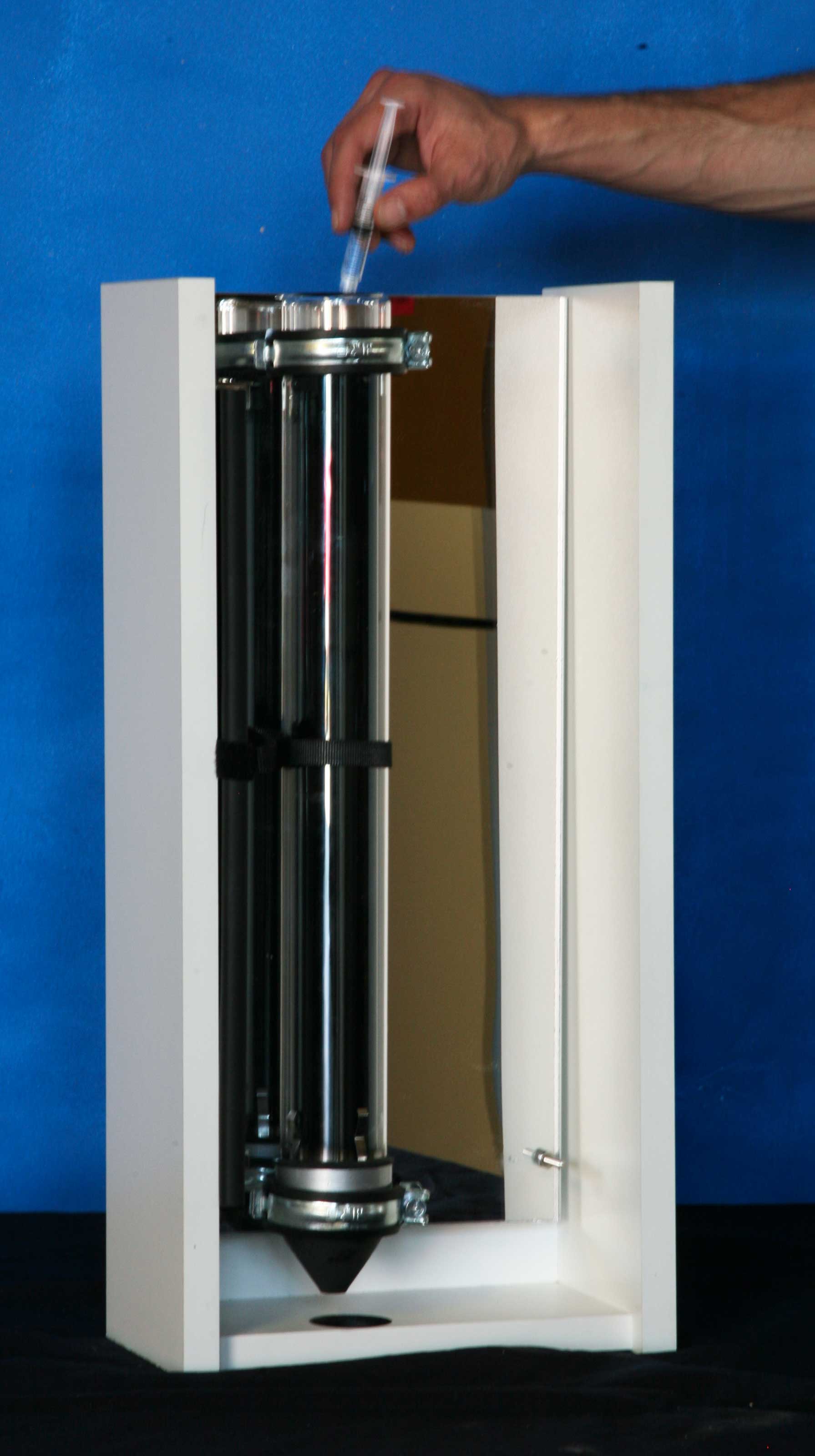
In developing countries, safely processing used syringes is difficult and often they are not disposed of safely. To compensate, auto-destruct syringes are typically used. These devices prevent the reuse of contaminated syringes. Sun Frost has developed a solar device, the Syringe Mate, which melts and sterilizes plastic syringes. After melting, the sterilized needles are safely contained in the melted plastic matrix (Fig. 1).
The Syringe Mate simplifies the sterilization and disposal processes. In the clinic, syringes are dropped directly into the vertically mounted Syringe Mate (Fig. 2). This procedure minimizes handling, reducing the possibility of accidental needle sticks.
Typically, if the used syringes are processed at all, they are placed in a cardboard box and incinerated. The process is polluting and results in needle waste, which should be contained in a concrete-lined incineration pit.
-

- Fig. 1: Melted syringes encasing needles
-
- Fig. 2: Syringe Mate mounted vertically for use in clinic
-
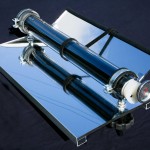
- Fig. 3: Syringe Mate sterilizing/melting syringe waste
The Syringe Mate incorporates a vacuum tube collector and several reflectors allowing it to operate effectively even under hazy sun conditions (Fig. 3). The plastic syringes melt at 350˚ F. Even at this temperature, the external surface of the collector tube remains just slightly above the ambient temperature and is safe to touch as a consequence of the high R-value of the evacuated tube. The Syringe Mate makes the proper disposal of used syringes simple and safe.
Vietnam Test of Li and NiMH Batteries Powering a Sun Frost RFVB-134a Vaccine Storage Refrigerator
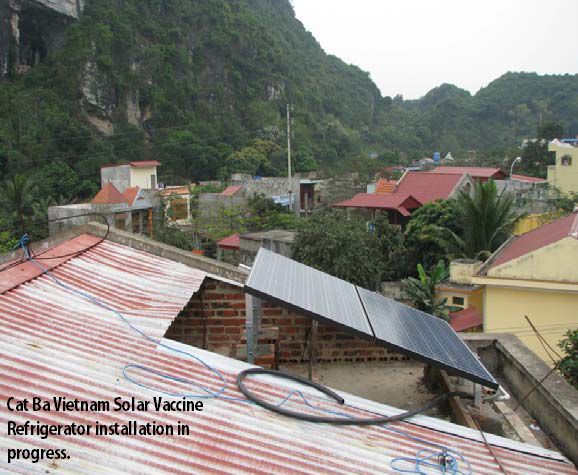
For solar powered vaccine storage refrigerators installed in developing countries, batteries are the weak link in the system. Lithium Phosphate (Li) and Nickel Metal Hydride (NiMH) have the potential of lasting 10 to 20 years. The life of a lead acid battery can vary significantly, from 3 to 20 years. A project supported by PATH tested two refrigeration systems. Both incorporated Sun Frost RFVB-134a refrigerators, one with Li batteries and the second with NiMH. The battery banks incorporated some custom electronics so that the batteries could be charged with photovoltaics.
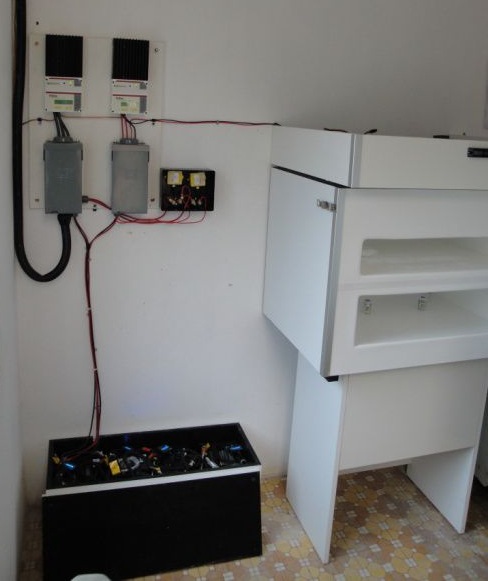
Sun Frost RFVB & Valence Li Polymer Batteries
Problems were encountered with both the NiMH and Li batteries. Failure of the NiMH batteries were catastrophic, the Li batteries had some cell failure which had to be replaced. Currently the Li powered refrigerator is still in operation. The batteries on the NiMH were replaced by lead acid batteries. NiMH deserve further testing in light of there excellent track record in the Toyota Prius. When using lead acid batteries the ancillary electronics required is minimal. This minimizes the probability of failure, particularly in areas with lighting storms.
Temperatures were monitored at two points in the Sun Frost refrigerator. The measured temperatures were very stable even with changing ambient conditions. The accompanying graph illustrates the stable performance of the Sun Frost.
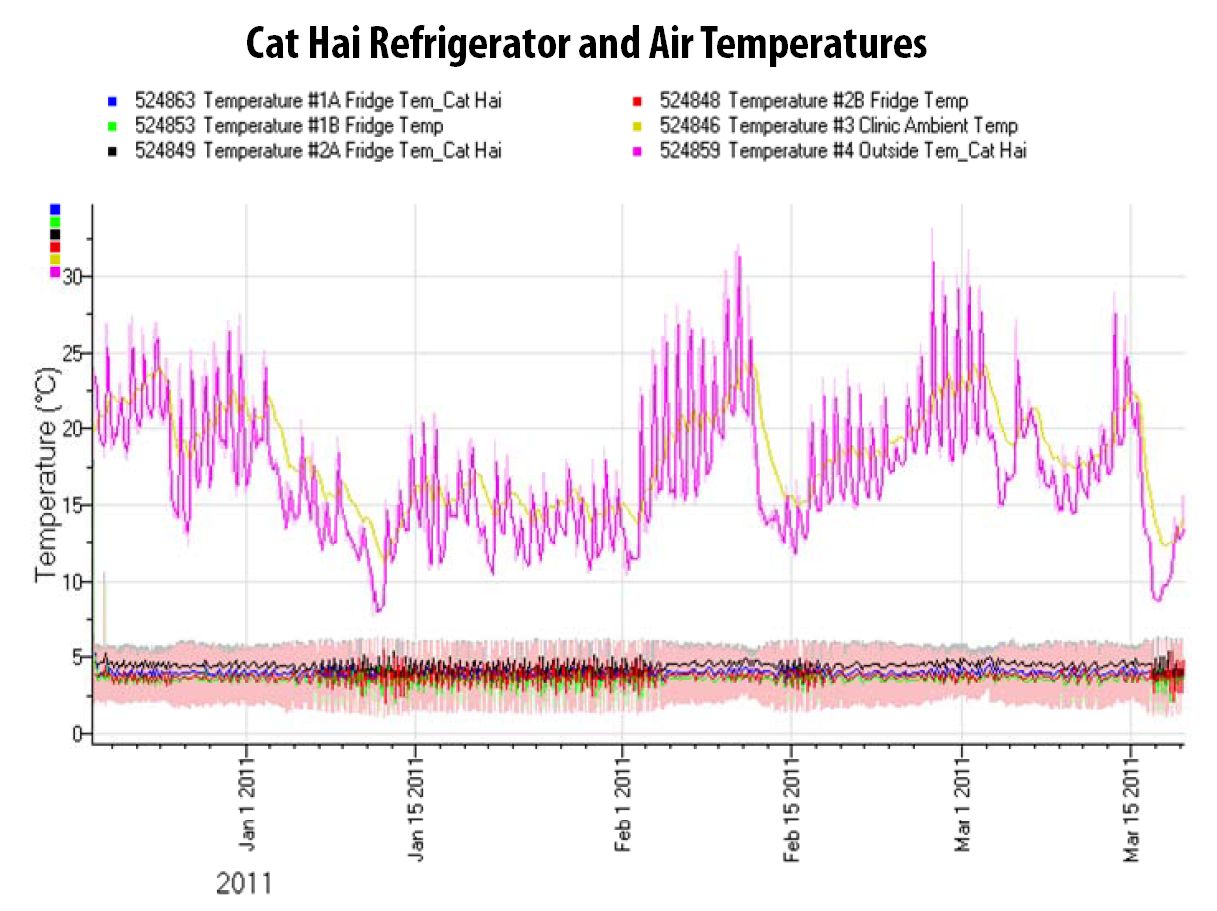
Sun Frost is working on a vaccine storage refrigerator, which incorporates load shedding. This device will control the load so that the batteries are shallow cycled. A temperature controlled battery compartment could also be incorporated into the device. A 10 deg C, 18 deg F, rise in temperature could half battery life. With these controlled conditions we expect the life of high quality lead acid batteries to be near 20 years. This load shedding system strategy could be used with Li or NiMH batteries. With load shedding the size of the battery bank can be reduced by about 80% making the use of relativity expensive high quality batteries more feasible.
This project was supported by PATH. A copy of the final report is available here:
Sun Frost has developed a simple device the R-Mat for measuring the R-Value of insulating materials. The R-Mat can measure the thermal resistance of materials used in thermal curtains or clothing.
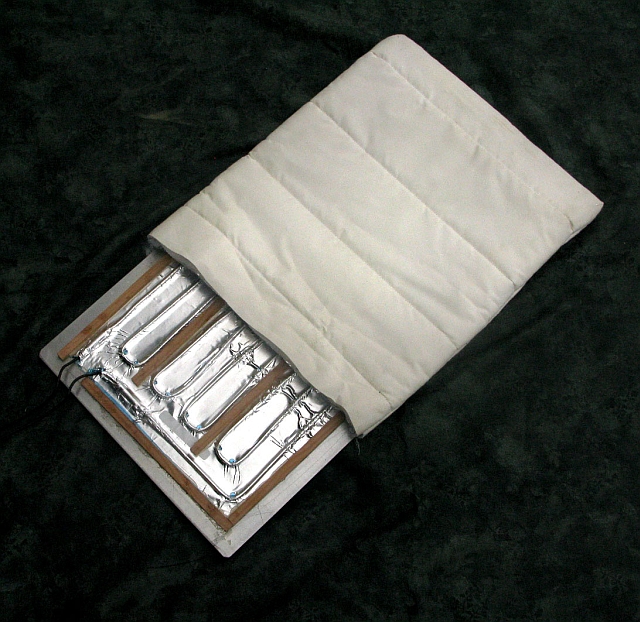
Sun Frost R-Mat
The device consists of a one-foot square plate, which is uniformly heated. The material to be measured is sown into a one-foot square envelope and the heating plate is then placed in the envelope. The envelope should be sown so edge losses are minimized. By measuring the temperature increase of the plate and monitoring the wattage used to heat the plate the R-Value of the material can be easily calculated.
Least Cost Energy Saving Rebate System
In California AB-32 requires the state to reduce its CO2 emissions by about 30% by 2020 and 80% by 2090. With the financial problems the state has it is of prime importance to try and reach these goals in the most cost effective manner. We designed a revenue neutral “paybate” system, which would encourage the most cost effective energy producing and energy conservation technologies. This letter was recently sent to our new governor Jerry Brown.
Pictured are some technologies which save energy but would not be eligible for any rebates currently available. The devices are discussed in more detail in the ASES describing my home.
—
Dear Governor Brown,
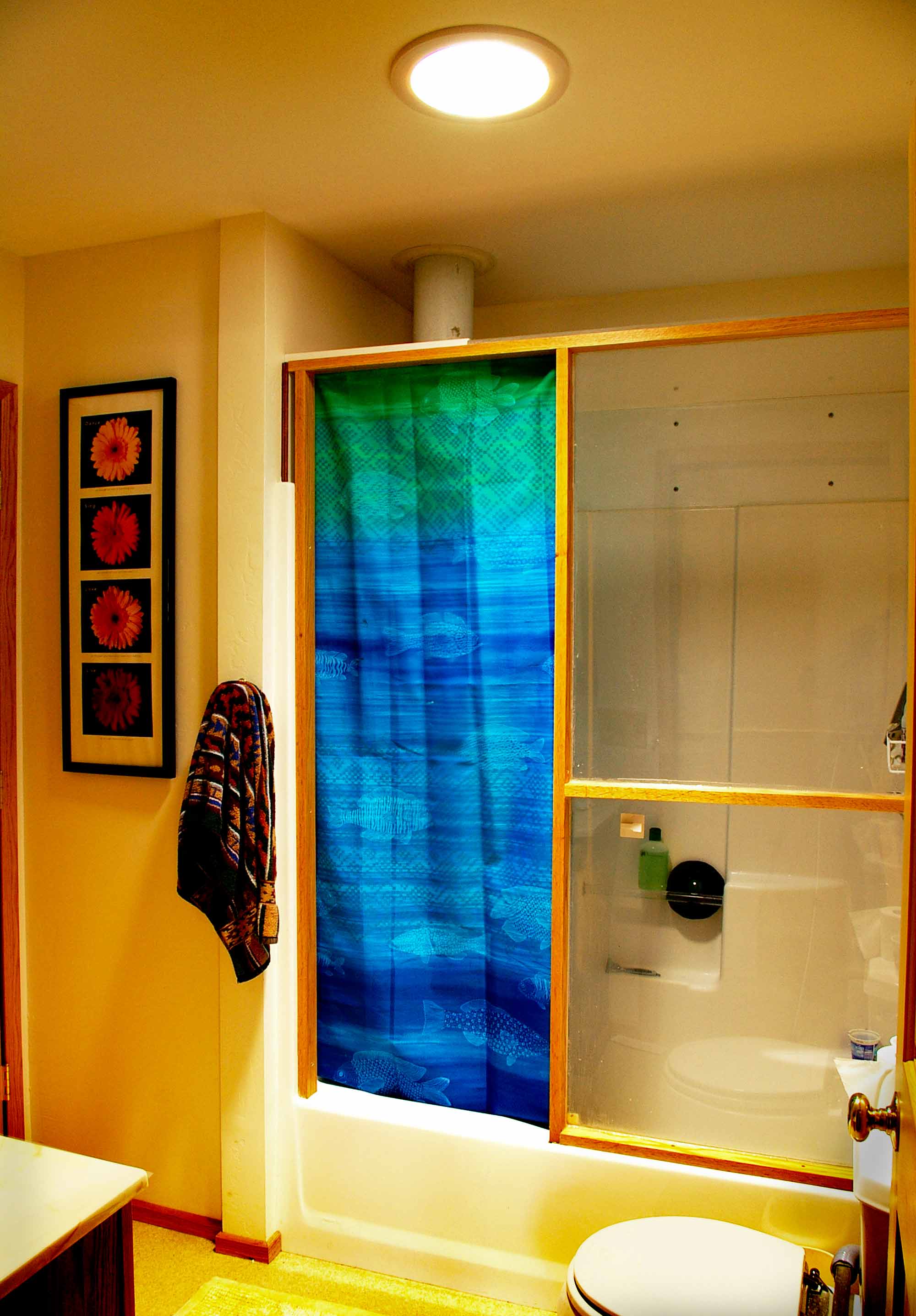
Energy Efficient Shower
I thought you would be interested in some suggestions I have for a performance based rebate system which would reduce primary energy consumption and carbon dioxide production in a cost-effective manner.
The rebate system would be based on the total primary energy used by a home or business compared to a standard. In this system, one unit of electrical energy consumed would count as 3 units of energy obtained from natural gas, since it takes about 3 units of heat energy to produce 1 unit of electricity. The homeowner or renter rebate would be based on their primary energy consumption compared to a standard home or apartment of that size. The occupants could reduce their energy consumption in the manner they deem most cost effective. Their methods may include an array of strategies including screw-in fluorescents, sealing the distribution ducts, solar or merely thermostat adjustments etc. Even a family renting, with limited funds, could participate in this program, with no investments by wearing sweaters & shutting off lights when not needed. The program could be revenue neutral by charging more for those over the standard and rebating or reducing the cost of energy to those under the standard.

Grass Powered Mower
A performance-based program assures that the rebates will be made only on equipment that is functioning properly. Since many of these improvements are local, they will create jobs for the local economy. Another advantage of this system is that the rebate programs could be simplified. The programs could address improvements from refrigerator replacement to solar hot water installations in a simple rebate system.
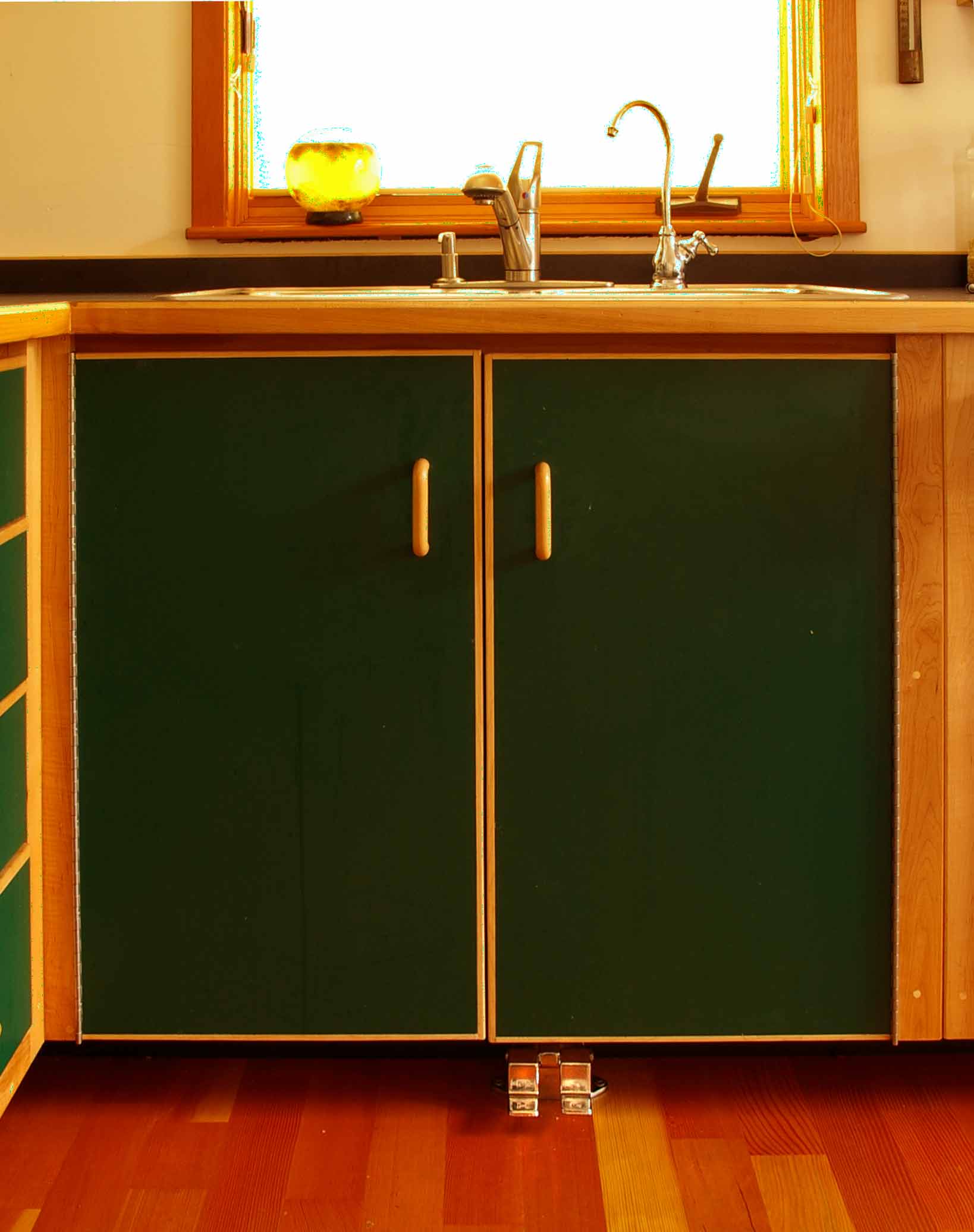
Foot and Hand Controlled Faucet
For new construction, the rebates could be shared by the builder and the homeowner for a 5-year period. This will encourage the builder to include options that are most cost-effective and reliable. For example, the orientation of windows to prevent over heating during the summer and provide solar heating during the winter is a strategy that is effective but often overlooked in new construction. With this rebate system, builders would consider window placement in enhancing efficiency.
To encourage the use of renewable energy resources, the rebate could escalate as the home approaches zero energy consumption. For example, if the average home in a class used 1000 kw hours/mo., a home that cut its energy use by 33% could be charged half the normal cost per kw hour. A home that cut its energy use by 66% could be rebated 12 cents for each kwh they are below the standard for a period of 5 years. If a homeowner achieved zero energy for the year they could be given an additional $3,000 / year rebate for a 5 year period. This would encourage homeowners and builders to push the state of the art.

South Facing Windows
On the other hand, for example, if a home uses twice the energy consumed by the average home in its class the cost per kwh could be doubled. If a home is exceptionally large the cost per kwh could also be increased because the environmental footprint per occupant will be larger and require more energy & CO2 put into the air during construction.
A similar program could be designed for commercial buildings. A recent article in Home Power Magazine described the installation of a 5kw solar array on a small commercial metal building in Oregon. The PV system cost about $52,000. Local, state and federal incentives provided $46,000. The one story building incorporated no skylights or south-facing windows. Windows and skylights are particularly effective commercially because they provide both light and heat. Since these buildings are used primarily during the day, no storage is needed. A much more cost-effective strategy for this building would be to employ windows and skylights to supplement its lighting and heating requirements.
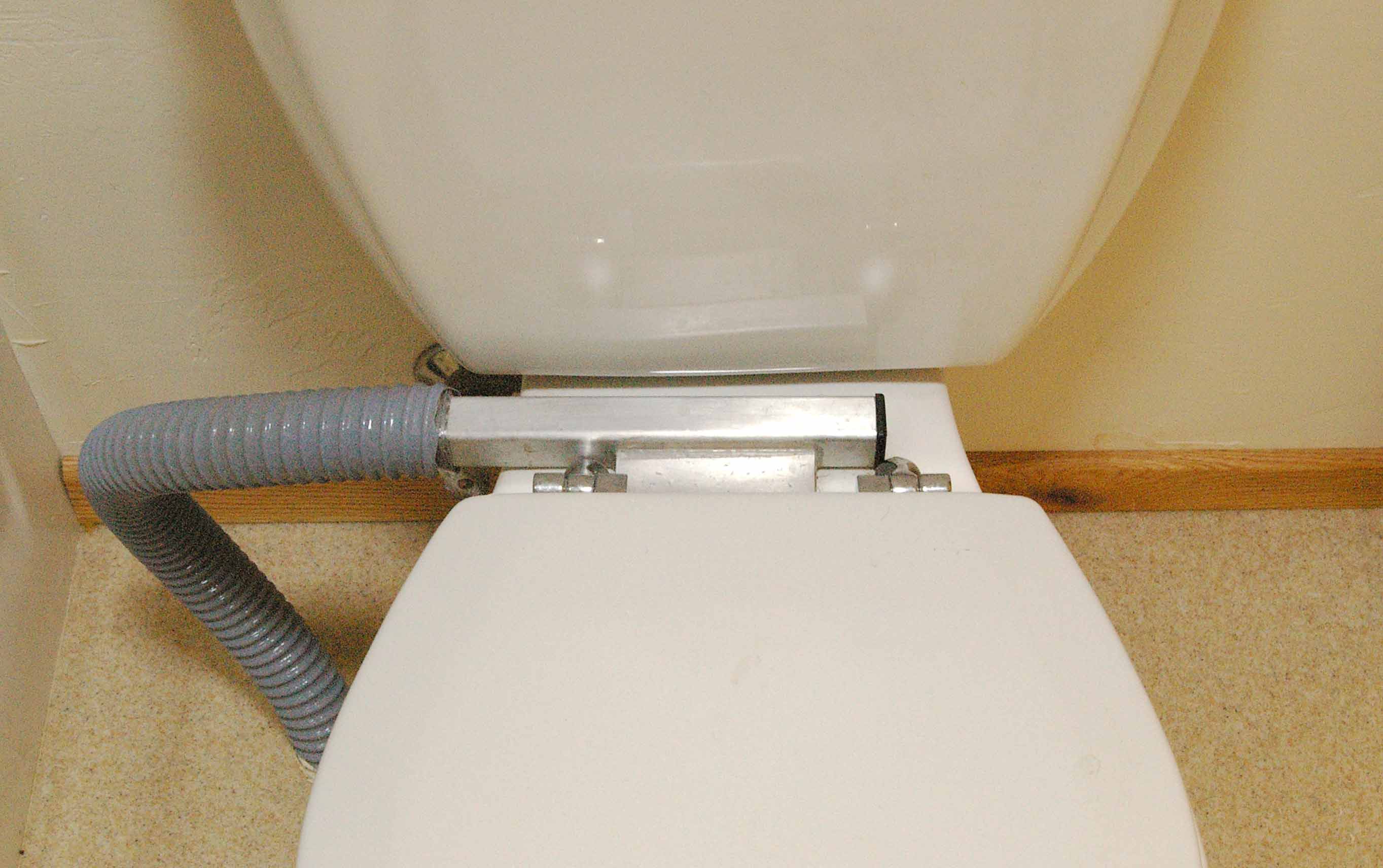
Task ventilation
If we don’t use our limited resources in a more effective manner, we won’t be able to make a significant reduction in our CO2 production. A performance-based rebate program such as this could make this process much more cost-effective.
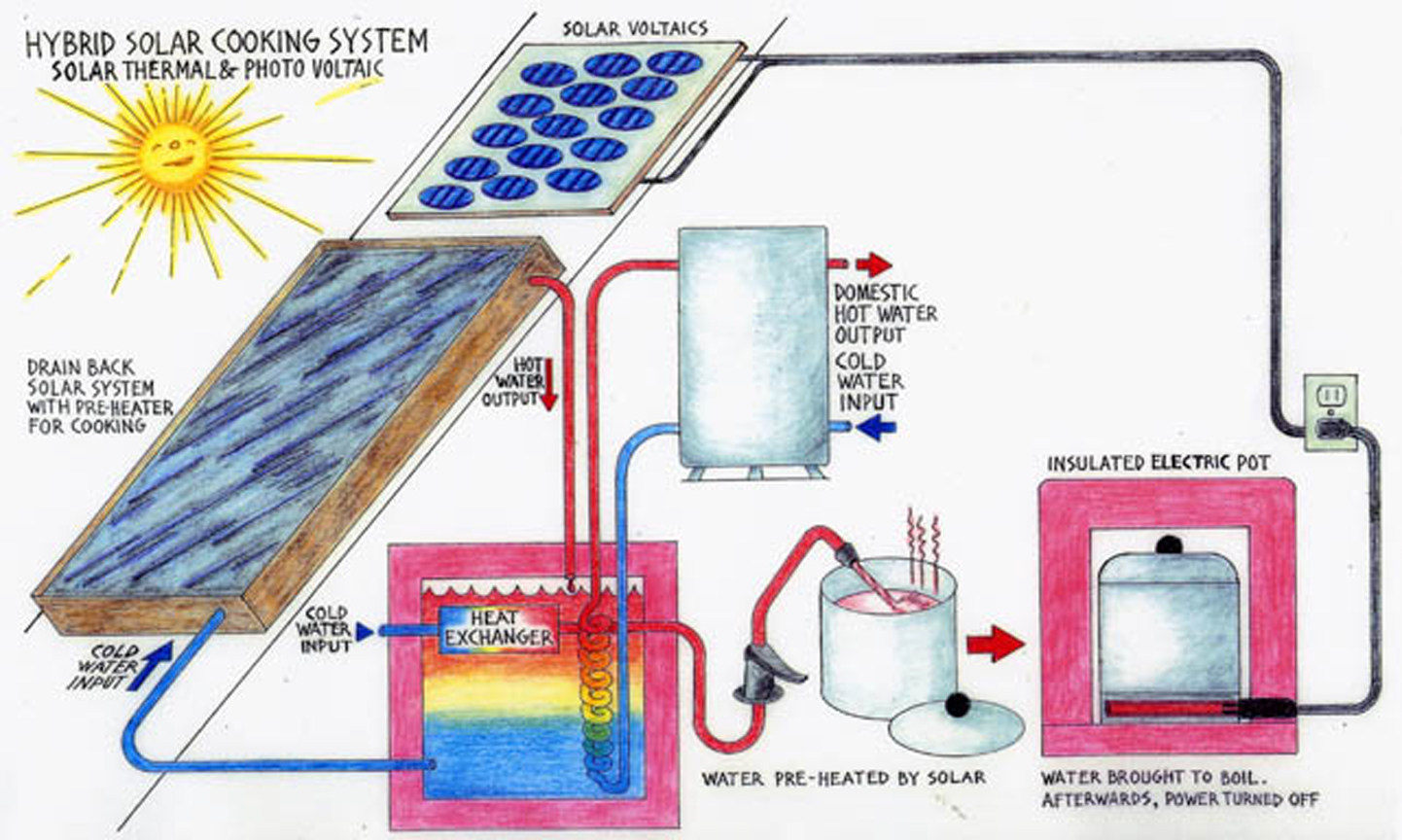
Solar Hybrid Cooking
If you would like to discuss this rebate system further, please write or give me a call.
Sincerely,
Larry Schlussler, PhD
—
Suggested Rebate system – “Paybate” Approach
Promotes lowest cost energy saving measures!
- Looks at a home’s total primary energy consumed (electricity plus
gas). One unit of electricity counts as 3 units of primary energy. - Compares energy consumed to a typical home in its size range.
- System is based on performance.
- Performance can be achieved by conservation, renewables, or
thermostat settings; all up to the consumer. - Innovative energy saving methods can be incorporated without
bureaucratic obstacles. - System will encourage lowest cost methods of saving energy.
- The system is revenue neutral and prices escalate with use. When
energy consumption approaches zero, there is a substantial rebate. - Builders can participate by sharing cost savings for the first five
years. System would encourage builders to incorporate low cost
methods of conservation such as orientation. - System would simplify booking costs because a single rebate system
would replace numerous rebates for appliances and renewables.
Producing Distilled Water for Batteries
If a wet cell battery is not filled with distilled water, its life will be substantially reduced. In developing countries, it is often difficult to obtain distilled water. We recently investigated a number of methods distilling the small quantity of water needed for batteries. These included solar and fuel-based systems, as well as using waste heat from the condenser on our refrigerators. We eliminated using waste heat from the refrigerator’s cooling system because of the cost of modifying the refrigerator and the low rate of production.
Solar Distillation
The equipment needed for both the solar and fuel based methods is essentially the same, see Figure 1 below. For the solar application, we used a large diameter, relatively shallow pot with a glass cover. The cover was inverted so water condensed on the inside of the cover, ran toward the center of the pot and dripped down into a small cup. Water was added on top of the inverted lid to lower the temperature of the condensing surface and increase the efficiency of the still. The still will produce about 8 oz (200ml) per day.

Fig 1: Configuration for either solar or fuel based distillation. The pot cover would be glass for solar distillation.
If a glass covered pot is not available, a simple solar still can be made by placing a black open-topped can inside of a jar as seen in Figure 2. The can is filled with water. Water then evaporates and condenses inside the jar. The lid of the jar should be lightly insulated to prevent water from condensing on the lid and dripping into the open topped can. Sitting this jar on a reflector will increase distillation capacity. With a reflector, about 1 ounce (30 mL) could be produced per day. Production per day will decrease as the can empties. The can should be refilled when it is half empty.
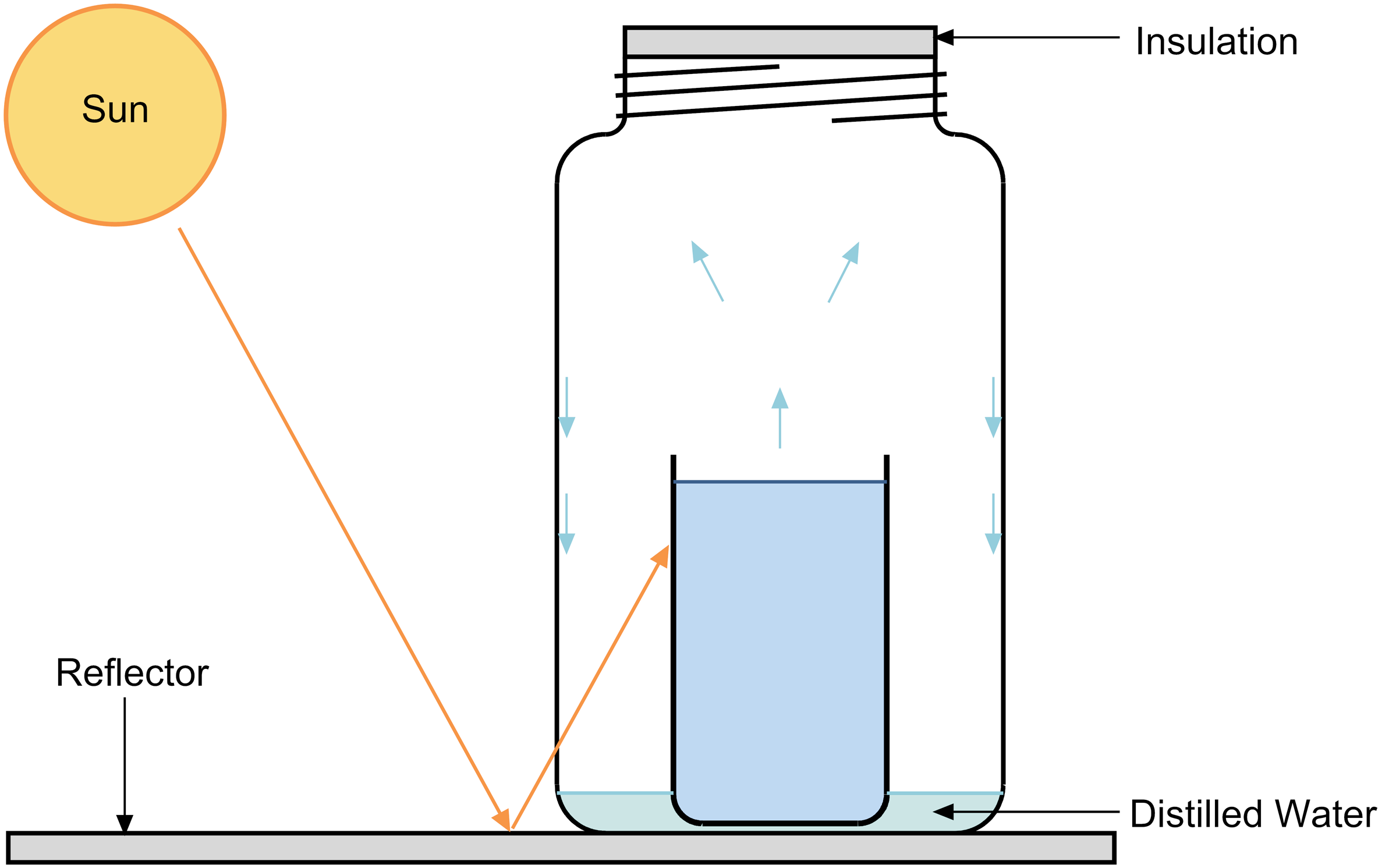
Fig 2: Simple Solar Still
Fuel Based Distillation
A pot could also be used as a still for a fuel-based system, however the lid of the pot need not be glass. The lid would be inverted and filled with water as with the solar application. Filling the lid more than doubles the efficiency of distillation. Using wood as a heat source, about 0.5 kg of wood will produce about 0.5 L of distilled water. If a load shedding charge controller was incorporated into a solar power system, excess electricity could be used to power an electrical hot plate. About 0.5 kWh would be required to distill 0.5 L of water. Production with a fuel-based system could be as high as 0.5 L per hour.
Perhaps the simplest method of distillation is using a conventional pot with an inverted lid. The lid need not be glass. Any fuel could be used to heat the pot and enough water to fill a battery could probably be generated in less than one hour. For the batteries of a vaccine storage system, the water consumption can be quite variable depending primarily on the voltage setting. However, it will almost always be less than 0.5 L per month.
Vaccines are temperature sensitive; They must be kept cold, but should not freeze. When vaccines are transported in the field they are placed in insulated carriers along with frozen ice packs. If these ice packs are below freezing and come in close contact to the vaccines they could freeze the vaccines.
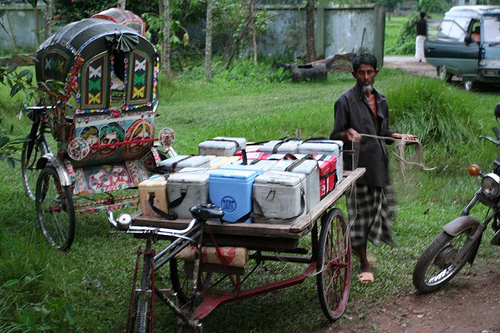
An assortment of vaccine carriers.
We have been looking at some simple measures to prevent ice packs from freezing vaccines. One method incorporates placing several layers of wet towels between the vaccines and the ice packs. “Coolth” is then absorbed by the towels when the water changes phase, instead of the vaccines. This process can absorb a large amount of “coolth” per unit weight of water in the towel. The heat capacity of ice is 0.5 Btu/lb./Fº while the heat absorbing capacity of water is 144 Btu/lb as it changes phase.
When subzero ice packs are placed against the towel, a layer of ice forms on the cold side of the towel protecting the vaccines. After a number of hours this ice will melt and the wet towel will remain between the vaccines and the ice packs. The wet towel has a low R-value so there will be good thermal contact between the vaccines and the ice packs. Good thermal contact will maximize the length of time the vaccines remain below 10 deg C.
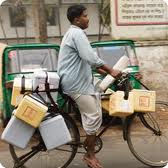
An assortment of vaccine carriers.
Another technique is to place insulation between the ice packs and the stored vaccines to prevent freezing. With this technique there will be a bigger temperature difference between the vaccines and the ice packs. This will increase the storage temperature of the vaccines. In hot weather the vaccines could then become too warm. This technique will also reduce the time the vaccines stay at an acceptable temperature.
With the wet towel methodology initial experiments indicate good freeze protection of the vaccines. This technique could easily be tested by placing a thermometer against the protected side of the towel with sub zero ice packs on the other side.
We would appreciate any comments you have on this process.
Building Science ‐ Something to Sleep On
The control of moisture in a building is critical for mold control and ensuring the longevity of a structure. Applying the principle that makes for a good wall design could help you sleep more comfortably. The same physics that govern moisture flow in a wall also determine the flow of heat and moisture in a mattress. In spite of the obvious similarities, I have not seen common engineering principles correctly applied to control moisture, mites and mold in the bedroom.
Relative and Absolute Humidity
Both a wall and a mattress contain a thick layer of porous insulation. During the winter a wall is exposed to warm moist air on the inside and dryer cooler air outside. Similar conditions exist across a mattress. There is a warm moist side under the covers and a cooler dry side underneath the mattress.
Under cold wet conditions a cubic foot of outside air may contain less moisture than a cubic foot of inside air. The reason for what may seem counter-intuitive is that warm air has the capability of holding much more water vapor than cold air. Water vapor is water in gaseous form as opposed to a liquid. The relative humidity (RH) is the percent of water vapor in the air compared to the maximum amount of water vapor that the air can hold at that temperature. If the temperature inside is 70ºF and the relative humidity is 50%, under cold wet outside conditions (40ºF, 90% RH), the air inside will actually contain three times more water vapor than the air outside.
The actual amount of water vapor in a cubic foot of air is called the absolute humidity. During the winter the warm air inside can hold more water vapor and have a higher absolute humidity than the cold air outside. The air inside has moisture added to it as a result of cooking, plants, showers, and human respiration increasing the absolute humidity. If there is a difference in absolute humidity across a porous piece of insulation, water vapor will migrate away from the side of higher absolute humidity. Moisture then migrates into a wall during the winter and into a mattress all year.
If a volume of air is cooled, its ability to hold moisture is reduced. When the relative humidity reaches 100% moisture in the air will condense. The temperature at which this happens is called the dew point.
The movement of water vapor into a wall can be retarded, by putting a vapor barrier on the warm side of the wall. These generally consist of an impermeable sheet of plastic. Sheetrock painted with an appropriate paint can also retard the movement of water vapor into the wall.
The outside surface of the wall should be breathable so that moisture leaves the wall faster than it enters. If the porosity of the outside wall is too low and it is unable to breathe, the relative humidity could reach the dew point and water vapor will begin to condense on the outer wall.
Mattress Moisture Theory
A person can lose about 8 oz. of moisture each night. Combined with body heat, this forms a layer of warm humid air under your blankets. Cool, drier air is under the mattress. These are the same conditions found across an insulated wall during the winter.

Moldy Matreess On A Cold Floor – Drawn by Anna Ludd
The same principle used to control moisture in a wall can be used to control moisture in a mattress. The strategy is to reduce the flow of moisture into the mattress and then provide for ventilation under the mattress so that any moisture traveling through the mattress can exit through its lower surface. This will decrease the moisture content of the mattress.
If the mattress is sitting on a cool impervious surface, the relative humidity could increase to 100% (the dew point). Moisture will then begin to condense on the surface below the mattress. The accompanying illustration shows the result of putting a mattress on a cool floor that is not insulated: a damp molding floor.
The moisture entering the mattress can be almost completely stopped by putting a vapor barrier on the top of the mattress. For comfort, the vapor barrier could be a flexible piece of plastic or coated nylon placed under the mattress cover. An effective vapor barrier can eliminate the need for air circulation under a mattress.
A vapor barrier can also aid in the performance of clothing and sleeping bags used in extremely cold weather. Sleeping bags used by arctic explorers have turned into solid lumps of ice as moisture condensed and froze the bags outer skin. The layer of ice would become thicker each day. Using a vapor barrier inside the bag would prevent this problem.
Reducing the Biological Activity in Your Mattress
Dust mites and mold need food and moisture for their survival. The skin particles we shed are a major nutriment source for dust mites and mold. Most mattress covers available have a very tight weave that keep dust mites below and skin particles above. The breathability of these mattress covers is promoted as a positive feature. However, because the covers breathe, moisture in the form of water vapor is still transferred into the mattress. Both dust mites and mold can extract moisture from the air when the relative humidity is relatively high, above 80%. More moisture becomes available to these critters as the relative humidity approaches 100%. A vapor barrier would eliminate both the flow of moisture and nutrients migrating into the mattress.
If the mattress is placed on a solid non-breathable surface, the use of a vapor barrier also eliminates the possibility of condensation on the mattress’s lower surface. At night the relative humidity near the lower surface of a mattress, even if well ventilated, can reach 80% or more providing the moisture needed for a healthy population of dust mites. My mattress is sitting on a sheet of plywood over a bottom-mounted set of drawers. The room stays fairly cool all year. Without the use of a vapor barrier in the mattress cover, the plywood would be wet and probably moldy. With the vapor barrier it’s perfectly dry. The measured moisture content of the plywood is the same as the moisture level of the other wood structures in the room.
The situation is similar for a pillow. Warm moist air is breathed out and then migrates into the pillow where dust mites and mold can grow. A vapor barrier on the top of the pillow would alleviate this situation. The bottom of the pillow should remain breathable.
The vapor barrier I used was a very thin sheet of polyethylene plastic. Polyethylene is a fairly inert plastic. We are also investigating the possibility of using other materials as a vapor barrier. The vapor barrier was placed under a quilted mattress cover so its presence is not noticeable. The mattress cover and sheets are both washed for dander control.
A co-worker has a similar sleeping arrangement, but they have no vapor barrier. Their setup consists of a foam mattress sitting on a plywood deck. Because of the moisture collecting on the plywood, every few months both the mattress and plywood must be dried out.
It is somewhat surprising that these easily applied engineering principles are not more readily applied to the household environment. With or without the use of a vapor barrier it is a good strategy to let your bedding dry out during the day. It may be good news that making your bed may not be the best strategy.
Which has a smaller carbon footprint, a gas powered vehicle or an electric car? Energy in the form of electricity is more valuable than energy in the form of heat. According to the second law of thermodynamics, all the heat energy in a combusted fuel can not be turned into mechanical energy or a form which is equivalent to electrical energy. Power plants that burn fossil fuels typically turn 1/3 of the energy in the fuel into electrical energy. Several articles I have read on electric cars equate heat energy and electrical energy. They assume all the energy in a gallon of gasoline can be turned into electricity, which can not be done by an engine incorporating combustion.
 Fuel cells have the potential of changing a much higher percent of a combustible fuel into electricity. The energy content of hydrogen for example could be converted to electricity either in a fuel cell or in a combustion engine. Conversion in a fuel cell would be much more efficient. Unfortunately only a limited number of fuels can be used in a fuel cell and a number of practical problems with fuel cells are awaiting solutions.
A straight forward way to compare the carbon footprint of a combustion powered and battery powered electric vehicle is to look at how far a car can travel on a gallon of gasoline. For the electric vehicle, the gas could be combusted in a conventional power plant and 1/3 of its energy could be converted to electricity. The gallon of gas will produce 11.7 Kwh’s of electricity. A typical electric car will travel about 3 miles on a Kwh of electricity. From data given by Nissan, it appears that the Leaf traveling at 55 mph will consume 1 Kwh for 3 miles of travel. The Leaf will then travel 35 miles on the energy produced from a gallon of gasoline. A Prius would travel about 50 miles.
A number of factors could affect the relative advantage of the Prius. An advantage could go to the electric vehicle if cogeneration was used to generate electricity. With cogeneration, the waste heat generated at the power plant is utilized. An automobile could also incorporate cogeneration if the driver could store and use the heat generated in the radiator. Perhaps this heat could be used for space heating or domestic hot water when the driver gets home. The details would have to be worked out.
In a fossil fuel power plant gasoline is not the typical fuel. Natural gas is typically used about 30% of the time and coal about 50%. When the energy equivalent of 1 gallon of gasoline is combusted in the form of natural gas, 32% less CO2 is put into the air. When coal is combusted, its one gallon equivalent produces 10% more CO2 than gasoline. In the United Sates electricity is also produced with hydro and nuclear power, which produce little CO2 directly. The contribution of other renewable sources of energy is very small. Considering the overall mix of fuel used in the US to produce electricity, an average Kwh of electricity would produce 29% less CO2 than a power plant burning gasoline.
In the previous example, if the 3 mile / Kwh electric car is plugged into an outlet where the utility has the average mix of generators, the electric car and the Prius will produce about the same amount of CO2 per mile traveled. There is currently no clear winner when it comes to a carbon footprint. Future technological improvements could change this balance to one or the other technologies.
A home owner with a grid tied photovoltaic (PV) system could increase the size of the PV system and generate the electricity needed to run the car renewably. To produce 1 Kwh/day, the investment in the PV system would be about $2000. For a 3 mile/Kwh electric car, an investment of $667 would be required to run the electric car 1 mile every day. If you drive 25 miles per day, the investment in the PV system would be about $17,000. This cost could be reduced by tax credits.
Instead of using the excess installed capacity to run an electric vehicle, the excess electricity cold be fed into the grid. In addition, if a vehicle similar to the Prius is purchased, the net effect on global warming will be the same in both cases. However, the electric vehicle will be a better investment because of the relatively low cost of electricity and the lower taxes on electricity.
Larry Schlussler, Ph.D.
Letter sent to Energy Star
Refrigerators
 Standard test conditions for refrigerators do not mirror conditions in a typical kitchen. Refrigerators are typically tested at 90 deg F with no food loaded and the doors closed. Most manufactures optimize their design for standard test conditions not typical usage. Energy Star wants to establish a “Top Tier” category for products. The accompanying letter requests “Energy Star” not establish a top tier category unless the test conditions more closely reflect in home conditions.
Windows
Solar gain through windows can be a benefit or a detriment. During the winter passive solar heat gain through south facing windows is the least expensive form of solar energy. During the summer solar heat gain through east and west windows can over-heat a home. The current “Energy Star” program does not give the Energy Star approval to windows appropriate for passive solar heating in most parts of the country. Regardless of location, the Obama stimulus plan does not give any rebates for windows appropriate for solar heating.
We would like to see “Energy Star” promote the appropriate windows for the various faces of a home. For example, high solar heat gain windows for the south face of a building and low solar heat gain windows for east/west walls. The following letter was written to Energy Star to promote these ideas.
————————————————————————————————-
Refrigerators
If Energy Star wants to maintain its credibility, the most highly rated products should consume the least amount of energy. For these two points to converge the test standards should mirror in use conditions.
For refrigerators, procedures for testing do not reflect actual in use conditions. The refrigerator is tested at 90º F with the doors closed. A kitchen would more typically have an ambient temperature of about 70º F and the doors of a refrigerator are opened when in use, allowing warm air and moisture into the refrigerator. In addition, warm food may be added for cooling or freezing.
If the design of the cooling system is optimized for 90º F, it will work less efficiently at 70º F, a temperature more often encountered in the home, and consume more energy on a yearly basis. Some of the components that can be optimized for ambient temperature are the capillary tube, system refrigerant charge, and the evaporator design. In our refrigerator we have a unique design for our evaporator, which has a relatively high efficiency at 70º F.
A refrigerator that handles moisture efficiently (requires a minimum of energy for defrosting), and cools food and makes ice efficiently is not rewarded in the current test system. For example, our refrigerator has two compressors and there are no air passages between the refrigerator and freezer. Typically the freezer evaporator also cools the refrigerator compartment resulting in relatively inefficient cooling. A refrigerator cooling system works less efficiently at lower temperatures (lower COP). In addition, with the dual compressor design, air passages between the two compartments can be eliminated which reduces frost buildup in the freezer. It also results in higher humidity storage conditions in the refrigerator allowing vegetables to be stored much longer.
Under closed door standard test conditions, little moisture enters the refrigerator and almost no defrost energy is necessary. A manufacturer could design his defrost heater to come on only for a minimal amount of time when the temperature is above 88º F. Schemes similar to this have been attempted. In use, however, the defrost heater must be on much longer to combat ice accumulation as a result of moisture arising from door openings and dehydrating food. A manufacturer with a method of reducing ice build up on the evaporator, or a method of defrosting more efficiently, would not be rewarded with the current test methods.
We are currently building a prototype refrigerator for the Cold Climate Housing Research Center in Alaska. This refrigerator will consume no energy during the winter. Coolth is transferred from outside of the refrigerator through two ¼ inch tubes. If Energy Star wishes to promote innovation of new concepts such as this, it should be reflected in their Energy Star Rating.
Total refrigerator sales would not be affected by implementing more realistic test procedures. However, the energy consumed by refrigerators would be reduced. As a result, retailers would probably not object to the new standards but most manufacturers would probably object to the design changes necessary to maintain their relative standing in energy consumption. Since our target consumer is seeking energy efficiency, we would actually welcome these changes.
Windows
The reputation of Energy Star windows, with solar oriented designers and builders, has severely suffered in recent years because windows with a high solar heat gain coefficient (SHGC) are not allowed in most parts of the country. As a result of these Energy Star standards, a home is unable to make use of passive solar gain—the cheapest form of solar energy. Educated consumers know they can not rely on Energy Star for making the most sensible choice in windows. I have talked to a number of scientists working in the windows group of Lawrence Berkeley National Labs. They were remodeling their homes and wanted to make use of passive solar gain on their south facing windows. To achieve their goals, they had to purchase windows that were not Energy Star compliant.

Good design would generally use high SHGC windows on the south side and windows with a low SHGC on the east and west windows to prevent overheating during the summer. The Energy Star program does not promote using different glazing on different faces of a home. In Chicago, because it is in the northern zone high SHGC windows can be used on all windows. Using high SHGC windows on east and west windows will result in higher air conditioning bills. Where I live in Arcata, along California’s northern coast, we have a long heating season and virtually no cooling degree days. Arcata has slightly more heating degree days than Washington, D.C. Here, south facing windows with a high SHGC would be beneficial. However, Energy Star recommends a SHGC of less than .4. As a result, passive solar heating is not effective. Nationwide, at least 3 times more energy is used for heating rather than air conditioning.
If Energy Star is to maintain its credibility, the highest Energy Star ratings should maximize energy savings. If the testing procedures are not modified for refrigeration, we recommend no changes be made in the program.
Compressor Replacement Without a Vacuum Pump
Replacement of a compressor requires the use of a vacuum pump. Solar
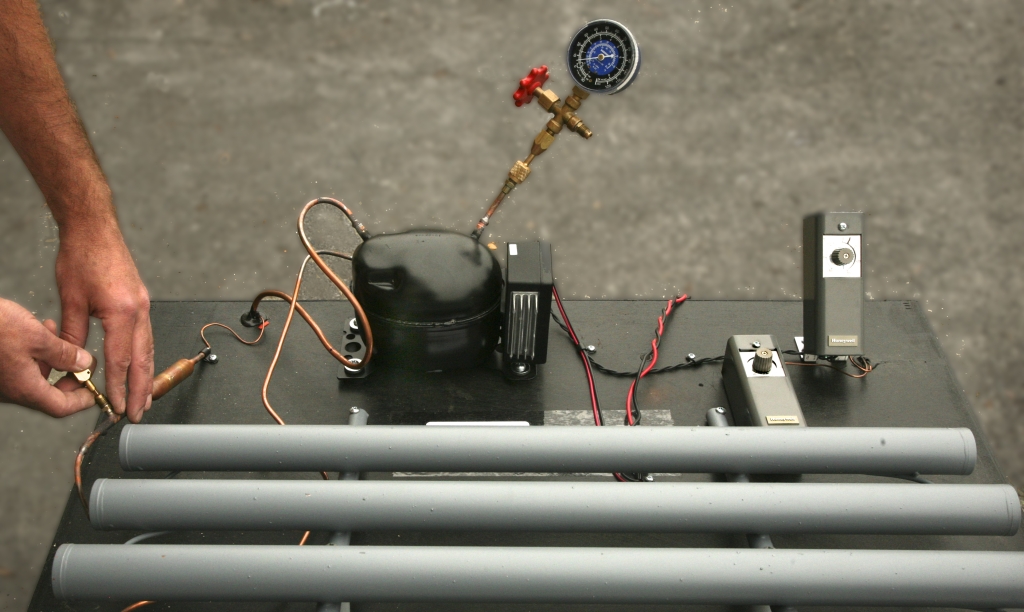
Compressor Replacement Without a Vacuum Pump
powered vaccine refrigerators are generally located away from the utility grid. Most vacuum pumps are powered by AC grid power making compressor replacement difficult. We have developed a method of removing the air from a system without the use of a vacuum pump. The method requires the installation of an access valve on the high and low side of the system.
Evacuation Procedure
1 – With the new compressor installed, turn on the compressor and depress the access valve on the high side of the system. Monitor the pressure on the low side of the system. When the pressure is as low as it will go, close the access valve on the high side of the system and turn off the compressor. This process will take about 5 minutes.
2 – Charge the low side of the system to approximately 14 psi.
3 – Wait about 3 minutes for the pressures on the high and low side to equalize.
4 – Now turn the compressor on and depress the access valve on the high side. When the pressure on the low side is as low as it will go, let the high side access valve close and turn off the compressor.
5 – Repeat steps 2, 3 and 4. Note, on successive evacuations, the low side pressure will not go as low because of the absorption of refrigerant in the compressor oil and it’s slow release.
6 – Charge the low side of the system to approximately 14 psi.
7 – Wait 3 minutes for the pressure to equalize. Turn on the compressor and depress the access valve on the high side. This time, when gas is no longer coming out the high side access valve, let the valve close. The air is now purged from the system.
8 – Charge the system with the appropriate amount of refrigerant and turn on the compressor.
9 – Make appropriate adjustments in system charge if necessary.em change if necessary.
Cold Weather Passive Refrigeration
In the mid 1980’s Sun Frost built a handful of refrigerators that used both passive and active cooling. We recently encountered renewed interest in this technology. We are currently refining the design and are building a prototype RF-16 for the Cold Climate Housing Research Center in Fairbanks, Alaska. In an exceptionally cold climate like Fairbanks the passive cooling can be used for both the refrigerator and freezer sections. With the new design the heat pipe transferring coolth from the outside is only ¼ inch in diameter.

Our previous design did not have an automatic means of turning off the passive cooling system when the refrigerator became too cold. Passive cooling could be reduced manually by partially covering the cooling fin mounted on the outside wall. These newer models will incorporate a thermostatically controlled solenoid valve to turn off the passive cooling system when the refrigerator gets sufficiently cold.
We are also building a passively cooled R-10, refrigerator only, for the Residential Energy Efficiency Project, a demonstration house in Kitchener, Ontario. These units will be tested in the field this winter. If the demand is there we will put these models back into production.
From a previous article on our Sustainability Page
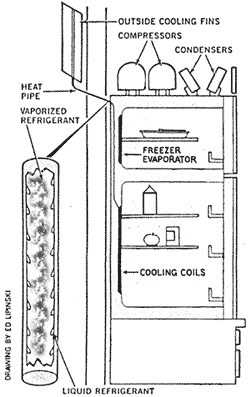
If you live in a cold climate, your refrigerator is often running when the temperature outside is colder than it is in your refrigerator. A simple way of using the “coolth” from the outside to cool your refrigerator is by incorporating a heat pipe. A heat pipe is a passive device that transfers heat by evaporation and condensation. Steam heat and steam cooking vegetables are examples of heat pipes in use. Absorbed heat boils water, the steam then condenses and releases its heat while heating your house or cooking your food, the condensed water then drains back to the boiler.
A heat pipe can be used to transfer heat from a refrigerator compartment to the outside. When the temperature is colder outside than in the refrigerator, the liquid in the refrigerator boils, absorbing heat and cooling the refrigerator compartment. The refrigerant then condenses outside and runs back to the refrigerator (see diagram). The pressure in the tube changes with temperature, so the liquid always boils when the temperature is colder outside than in the refrigerator. This device acts as a one-way thermal valve, if the temperature is hotter outside than in the refrigerator heat is not transferred into the refrigerator.
Refrigerators we manufactured incorporating a heat pipe also contain an active cooling system. When the temperature outside warms and the refrigerator can no longer be passively cooled, a thermostat with a preset temperature will turn on the compressor and cool the refrigerator compartment. Installation required only drilling a _ inch hole for the heat pipe running from the refrigerator to the outside.
In the mid 1980’s we built about ten of these hybrid refrigerators. The models without a freezer compartment coupled very effectively with a solar system. Since during the winter when available sunlight is limited, the refrigerator is passively cooled and requires no energy to run. With our RF16, the freezer compartment consumes about 60% of the total energy consumed by the unit. During the winter, the heat pipe would decrease energy use by 40%. One of the passively cooled refrigerators is located at the Rocky Mountain Institute in Colorado, where winters are long and passive cooling is effective. Although these refrigerators operate effectively, sales were limited and we no longer manufacture that model.
Air conditioning is not always feasible in large uninsulated spaces. In many parts of the tropical world traditional buildings are built with high ceilings and large windows to capture breezes. Because of size, air leakage, and the lack of insulation, these buildings would take enormous amounts of energy to air condition. In these climates, more modern apartment buildings are also being constructed, often of concrete with no insulation. If a bedroom contains a west facing concrete wall, the wall will be heated in the afternoon and this heat will flow to the interior 3 or 4 hours after sunset making sleep difficult. Air conditioning these spaces will be expensive and often unaffordable.
To solve this problem we used a two-pronged approach. We incorporated task air conditioning and used a cot-like structure to increase exposure to cool air. We constructed a sleeping space about 78 inches long, 34 inches wide, and 30 inches high. The space is insulated with one to two inches of foam insulation. A sliding acrylic panel above the occupant’s head gives the “Sleep Genie” an open feeling. The top half of the end panel folds down for easy access.
A conventional mattress is an excellent insulator; as a result, loss of body heat in the downward direction is negligible. A cot or hammock used in many traditional cultures is a much more comfortable way to sleep in hot weather since heat and moisture can escape from above and below.
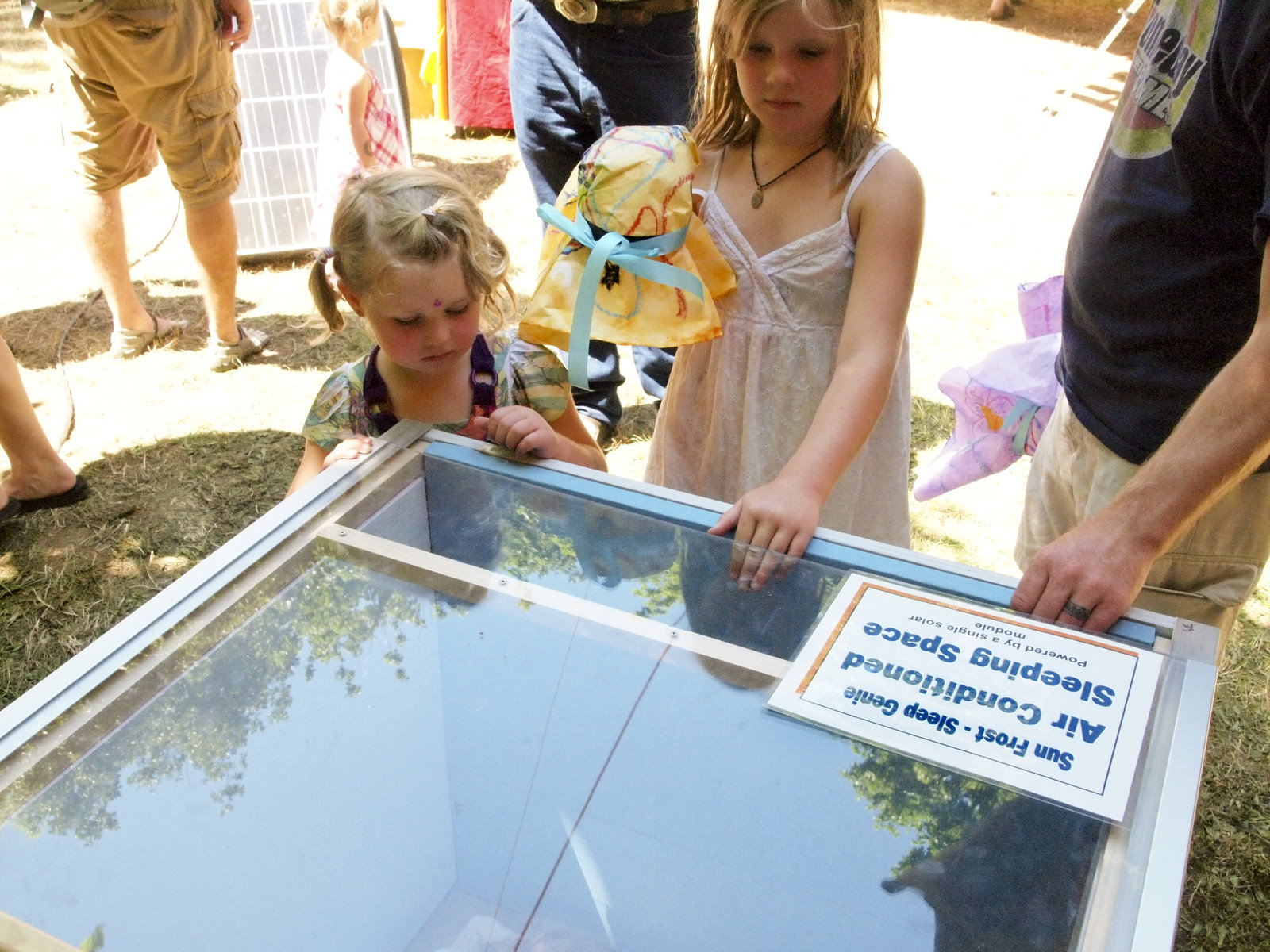
Checking out the Sleep Genie at the Oregon Country Fair
One of our customers is currently setting up a Sleep Genie in southern India where nights are hot and humid and no electricity is available. This “Sleep Genie” incorporates a small DC compressor that draws only 75 watts and could be powered by a 12-volt battery charged by a single solar electric panel with an output less than 200 watts. A 200-watt module is about 3.5 feet by 5 feet.
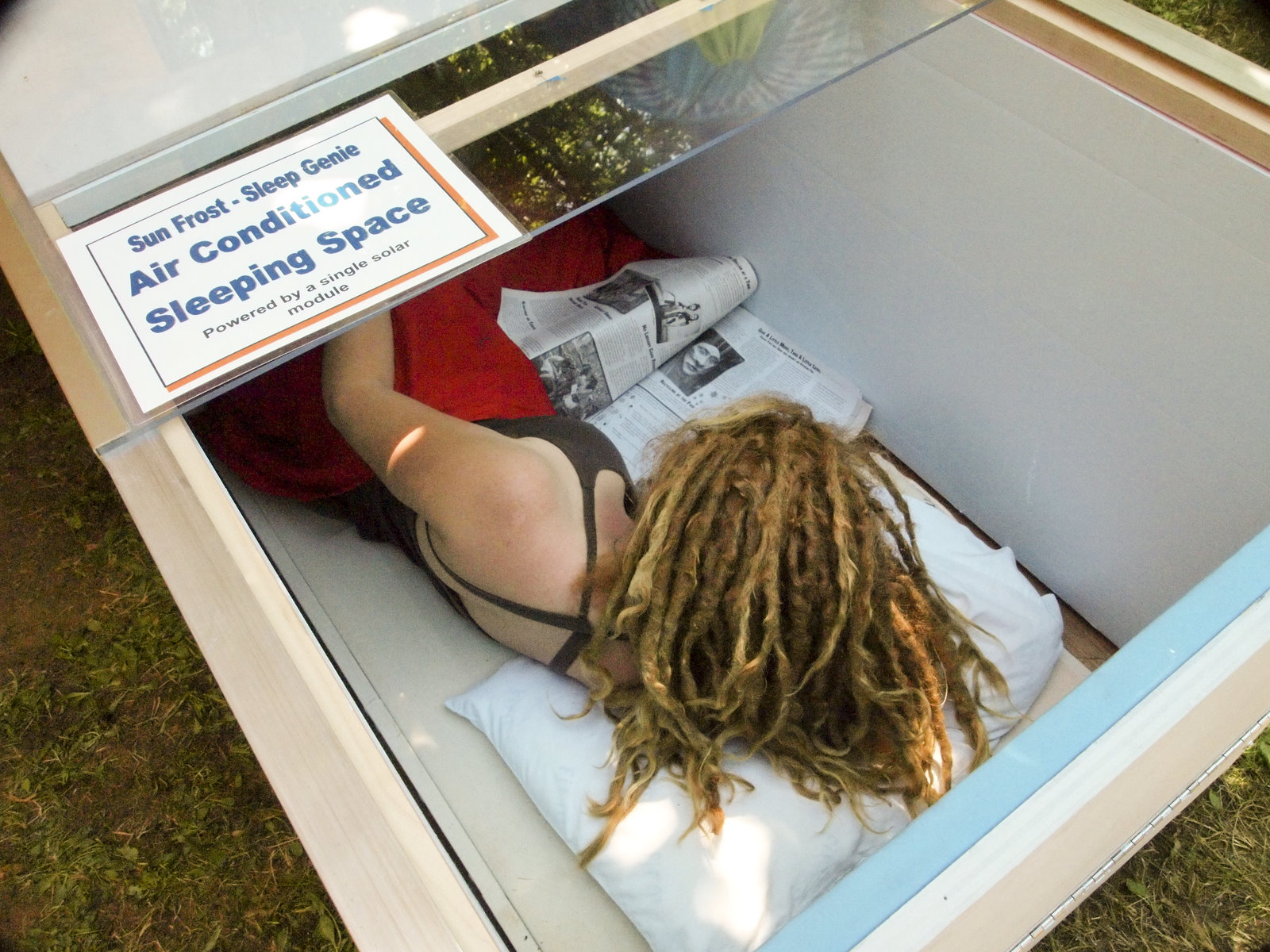
Escaping the heat at the fair
In July at the Oregon Country Fair we powered a “Sleep Genie” with a single 165-watt solar module in 90ºF+ weather and the “Sleep Genie” kept the sleeping space at a chilly 65ºF. The cooling system on the “Sleep Genie” could easily be modified to run on utility power. As the world becomes hotter and energy more expensive we anticipate this technology will fill a definite need.
ACRES Letter to the Editor
Recycling minerals nutrients is an often over looked key to sustainable agricultural – Letter to Acres appeared in the August 2010 issue.
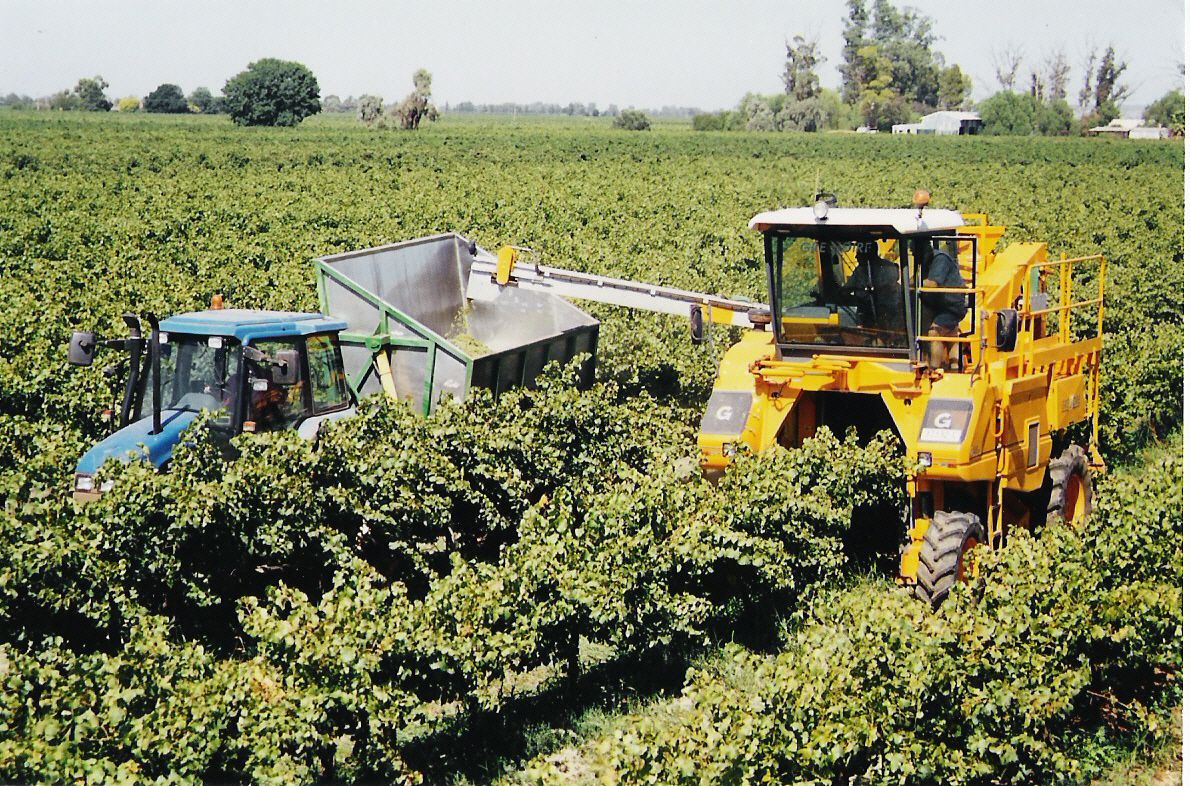
Sun Frost Cooker – Sterilizer
A Major Leap Forward in the Art of Solar Cooking

Sun Frost Solar Cooker – Sterilizer
Sun Frost recently built several solar ovens based on the evacuated (Thermos) tube technology commonly used in solar hot water systems. These ovens can achieve temperatures over 600 deg F. Temperature can be easily controlled by covering the collector or turning it away from the sun. The outside of these ovens is close to ambient temperatures even with interior reaching 600 deg F.
As a result of the small losses from the walls of the oven high temperatures can be achieved even in partial sunlight partial sunlight. We have built two ovens using this technology. One incorporates a 42” long 5” diameter tube and the second consists of an 18” long 2 ¼” diameter tube.
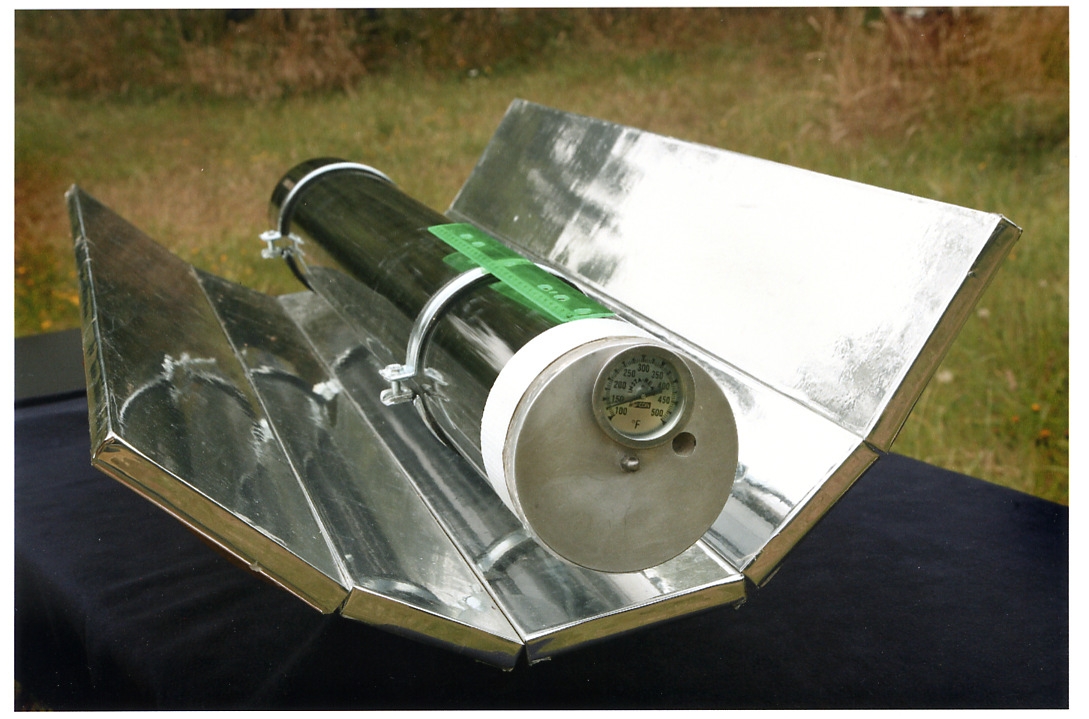
Sun Frost Tubular Cooker
In the larger oven we’ve cooked a variety of foods from lasagna to cookies. Cooking time are similar to those in a conventional oven.
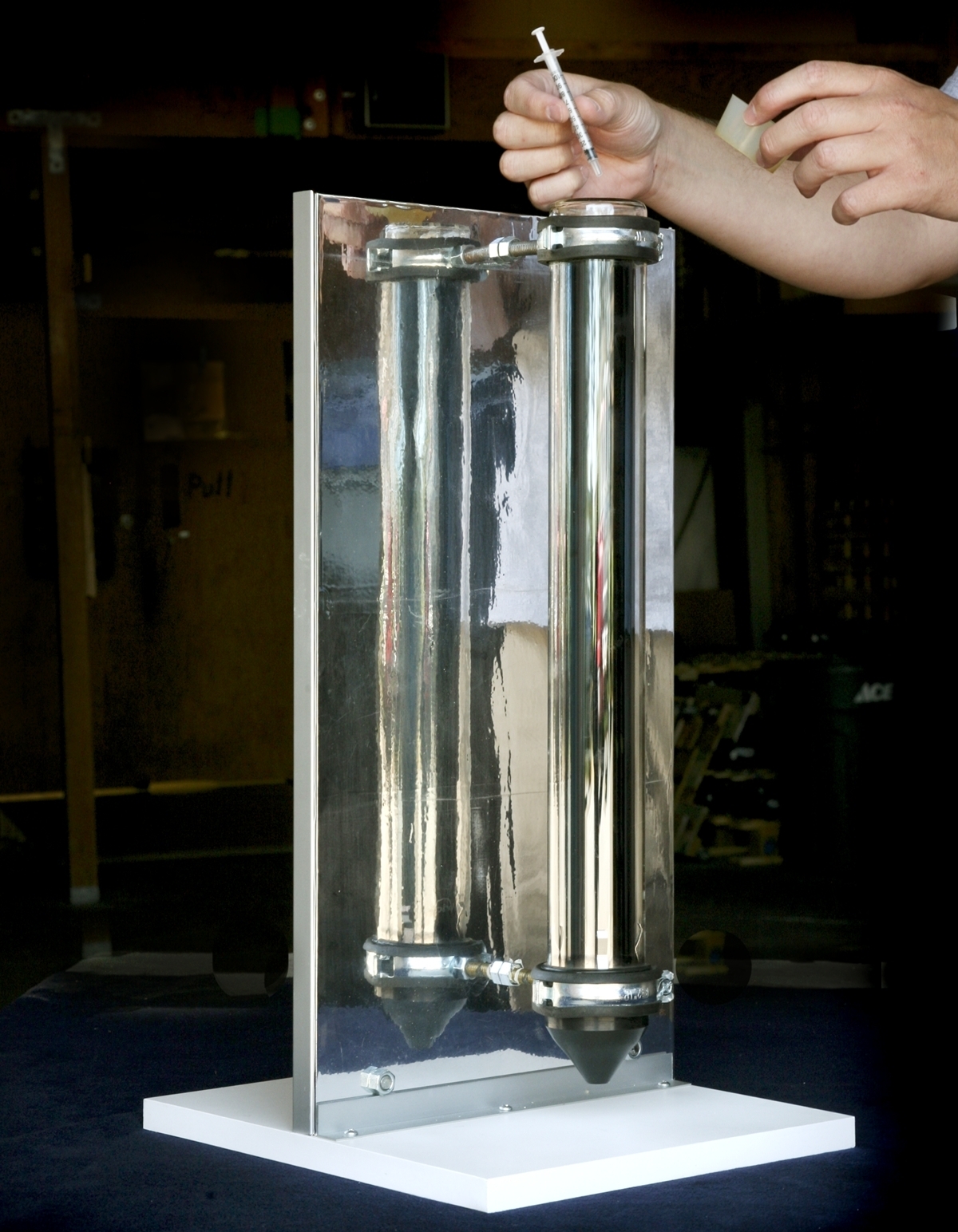
Syringes are inserted directly into the Sun Frost Sterilizer.

The vacuum tube collector is being removed from its stand.
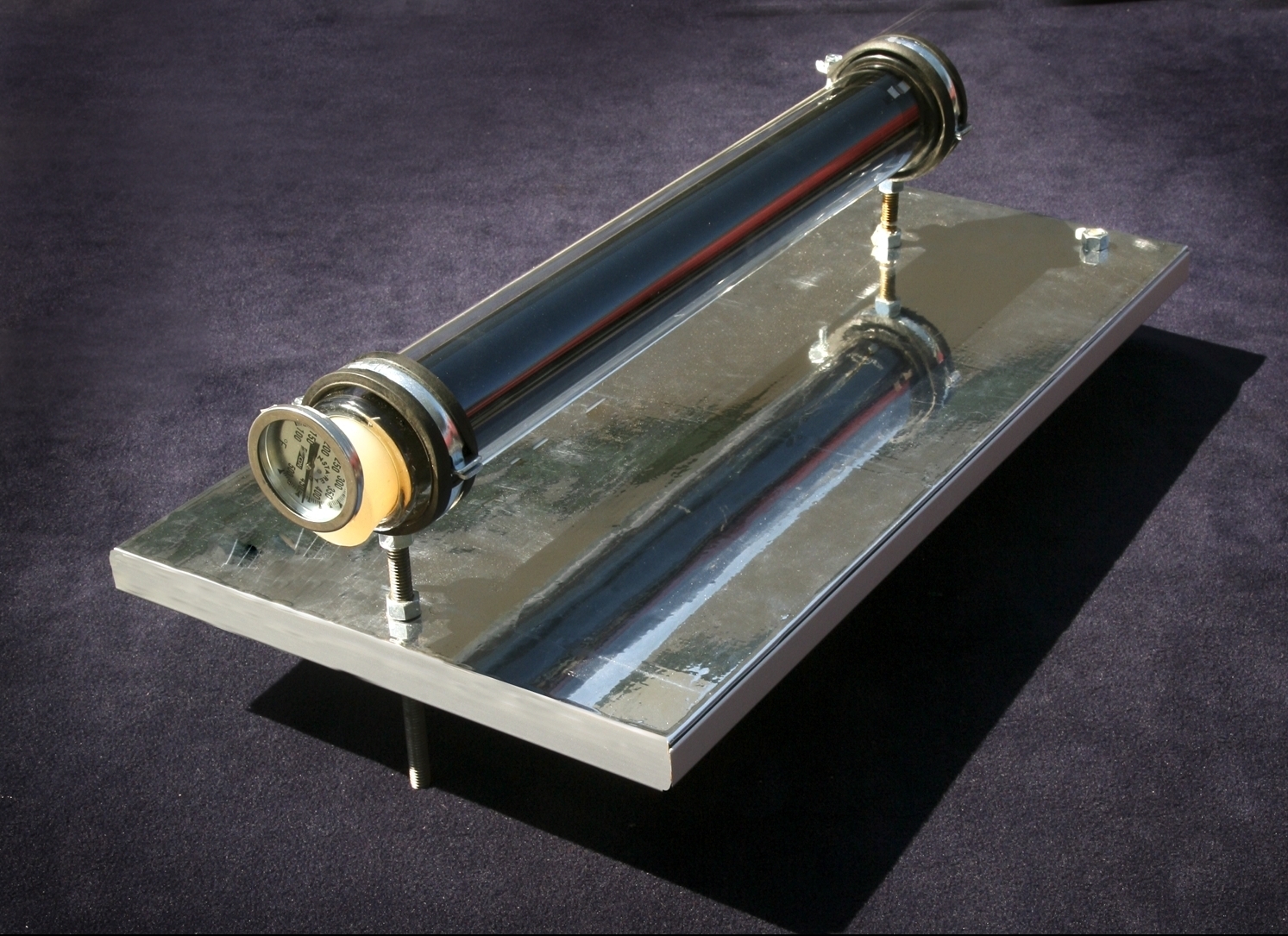
Sun Frost's Tubular sterilizer sitting in the sun.
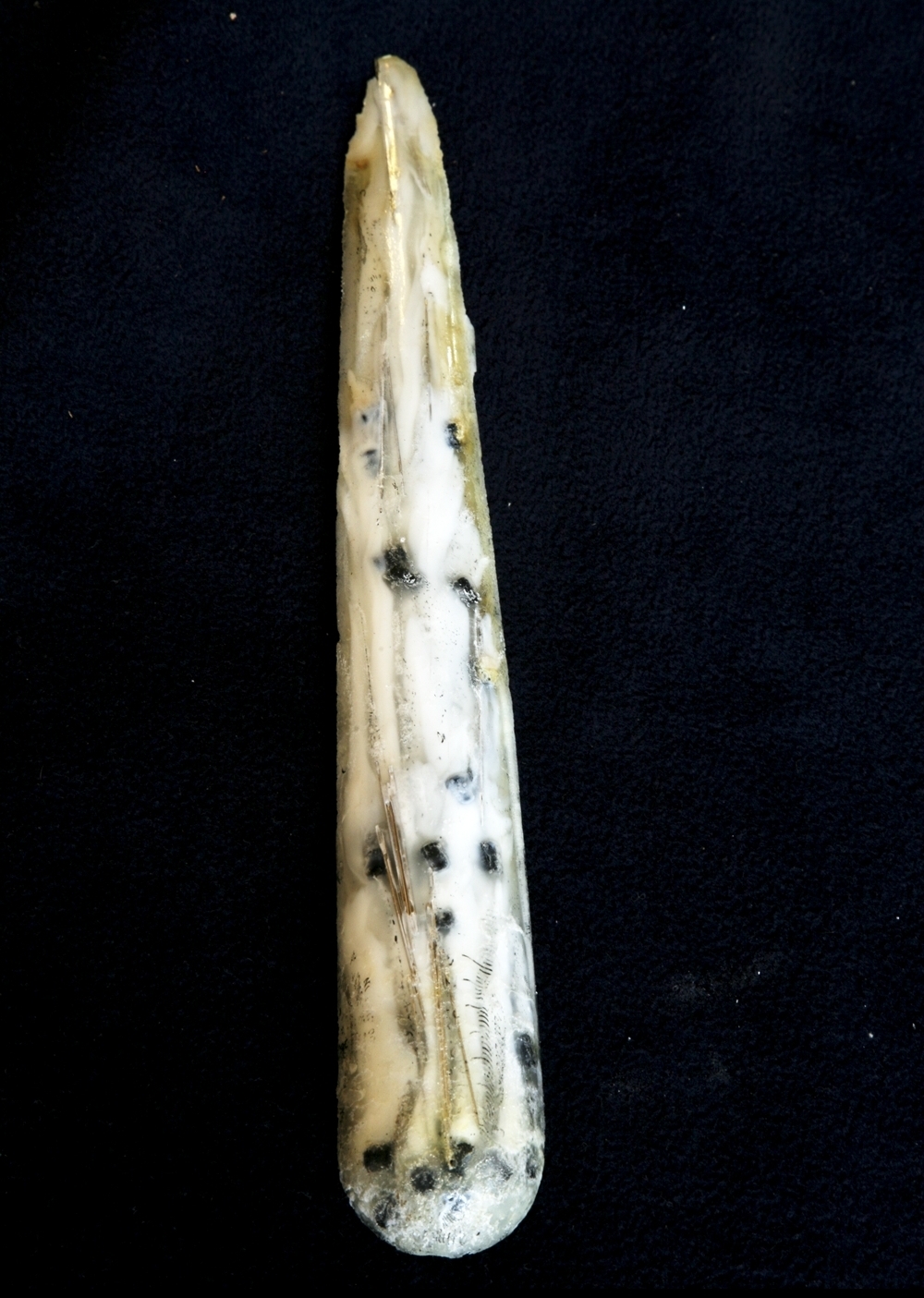
Melted syringes form a matrix encasing needles and black plungers.
Tesla Tractor Trailer
Last Saturday, JB Straubel (co-founder of Tesla Motors) picked up his Sun Frost RF16 along with a cabinet. He made the 300 mile trip from Arcata, CA to Menlo Park, CA with one re-charge.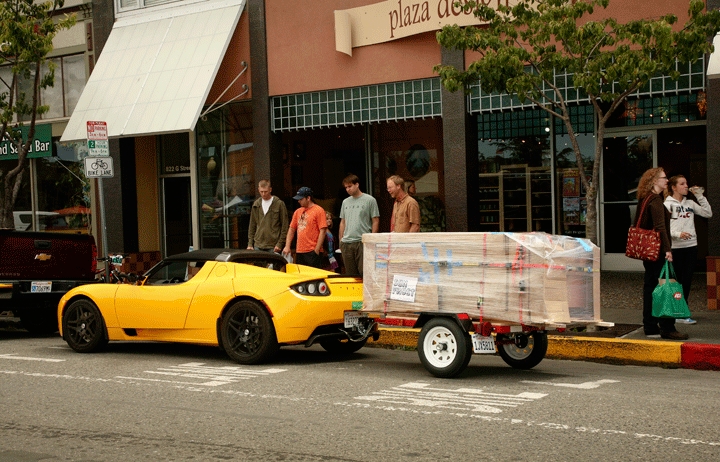
There are about 2 billion people in the developing world who do not have electricity and in many areas where electricity is available it is only available intermittently. Vaccines for childhood diseases such as polio, measles and diphtheria must be stored at typical refrigerator temperatures, between 2C and 8C (35F and 46F). There are about 4 countries where cases of polio still exists if the children in these countries could be immunized, like small pox, the disease could be eliminated.
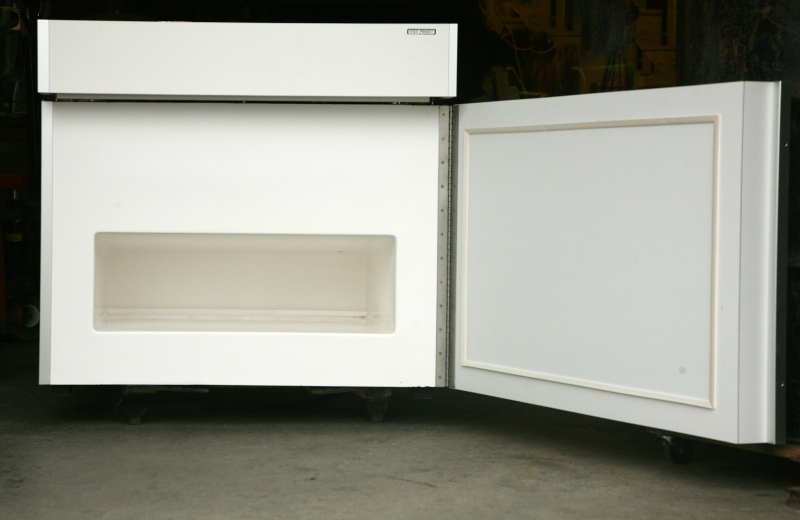
R-PbX Battery Free Refrigerator
There are refrigerators built for remote areas, which are powered by kerosene. However, the units are often unreliable because of poor temperature control, dirty kerosene and problems of maintaining steady supply of fuel. Solar powered refrigerators are gradually replacing kerosene refrigerators. Sun Frost had been building solar powered vaccines refrigerators for the past 15 years and has models in about 50 countries.
The primary components in the refrigerators solar power system are the Photovoltaic panels, charge controller and the battery. The weak link in the system is the batteries which could last between 2 and 8 years. Two years ago “PATH” an NGO supported by the Bill and Melinda Gates foundation put out a request for the development of a battery free refrigerator. They offered to pay for the testing for several companies who submitted what looked like potentially effective designs. PATH offered to pay for testing of a prototype which would be submitted by Sun Frost.
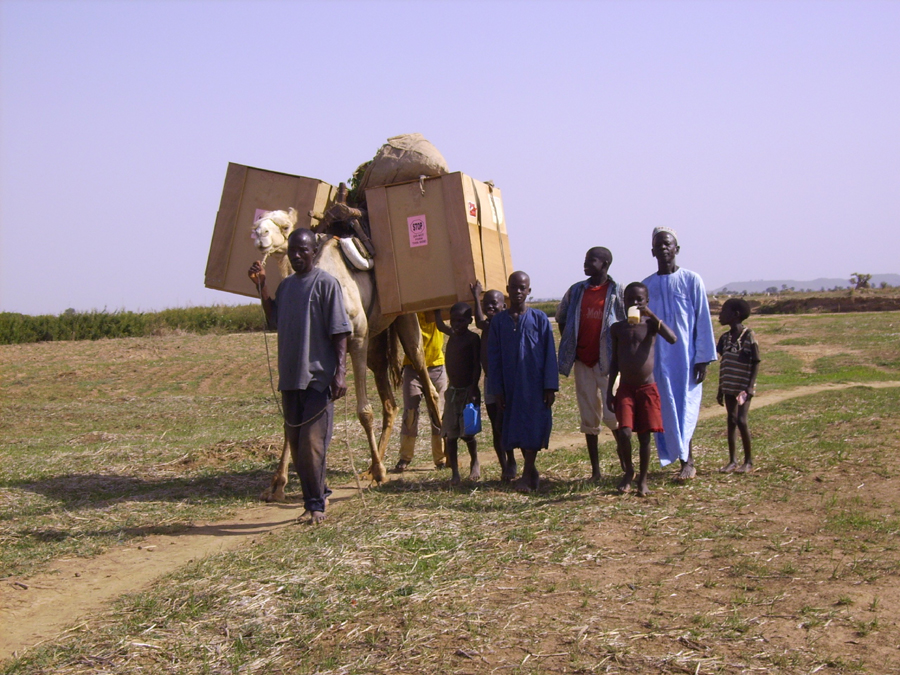
Sun Frost RFVB with battery storage delivered in Nigeria.
The freezer compartment in a vaccine refrigerator is used for freezing ice packs. The ice packs are placed in an insolated container along with the vaccines allowing the vaccines to be distributed to more remote villages. Unfortunately, WHO’s initial test procedures were unrealistic. After a year of waiting the test procedures was finalized at the end of May, 2010. Initially we will be sending a battery free refrigerator for testing which does not have an ice pack freezer.
A chamber in the refrigerator contains 50 pounds of water. The system compressor is directly connected to a Photovoltaic panel. When the sun is out the refrigerator makes ice in the chamber above the refrigerator storage compartment. A sufficient amount of ice is made to keep the refrigerator cold for 5 days in a 32C (90F) environment without the compressor running.
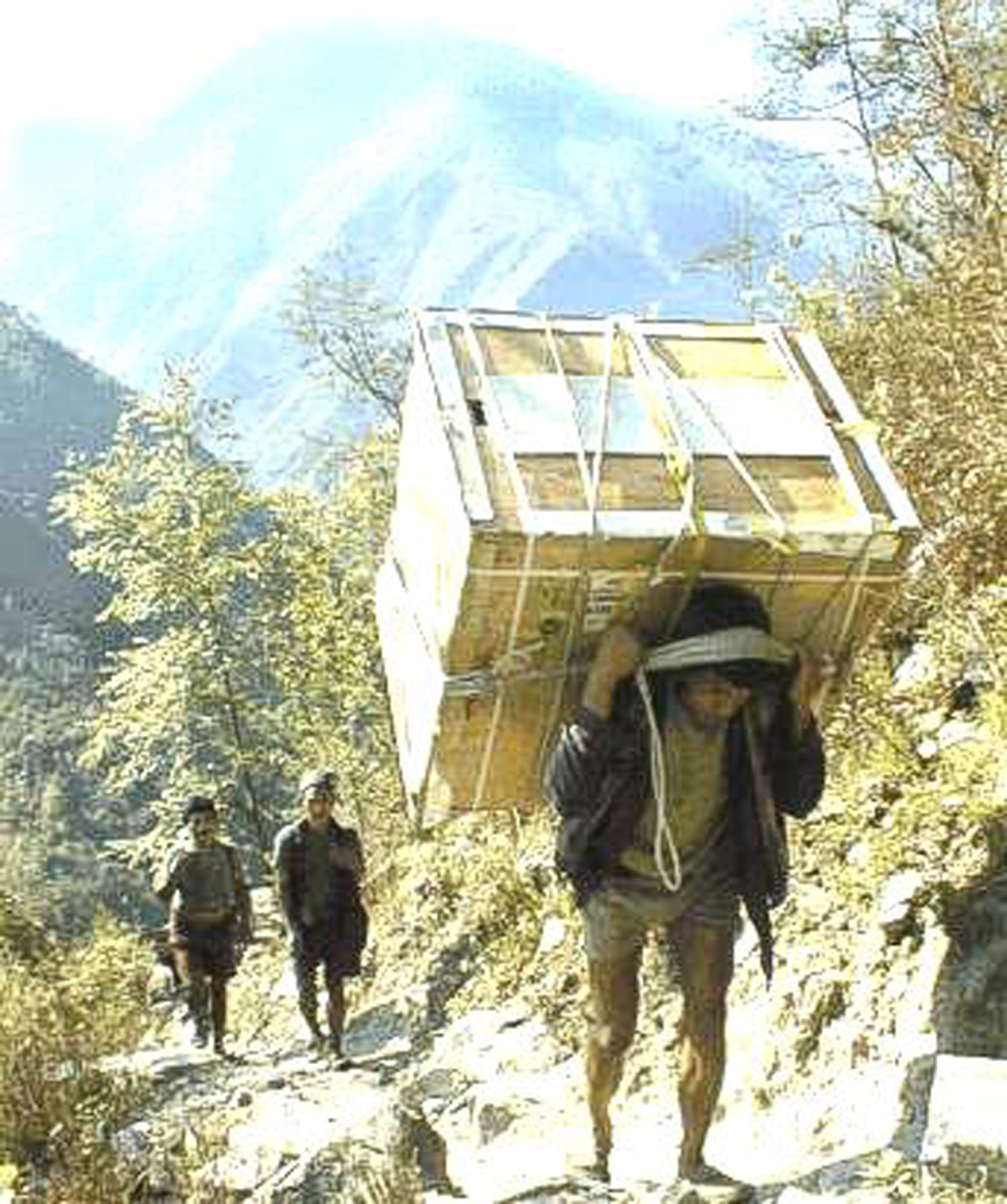
Sun Frost RFVB with battery storage delivered in Nepal.
A layer of water always remains between the ice and the vaccine storage area so that vaccines will never be exposed to freezing temperatures. A condition which could ruin the effectiveness of the vaccines. The refrigerator keeps vaccines at an appropriate temperatures from near freezing temperatures to ambient temperatures above 43C (110F) without adjustment. To my knowledge this degree of temperature stability is not available in any other vaccine storage refrigerator.
Installation of the refrigerator in the field will be simple and require only connecting two wires from the PV panel to the refrigerator. In the R Pb-X the temperature is controlled by monitoring water height as the ice freezes. The R Pb-X has no thermostat and the temperature never has to be adjusted in the field. The system should give over 20 years of trouble free service. In locations where utility power is intermittent an AC compressor could be installed on the Sun Frost R Pb-X. When utility power is available the ice storage compartment will be replenished. The Sun Frost R Pb-X will be capable of keeping vaccines cold for at least 5 days with out power. The Sun Frost R Pb-X should prove to be a significant improvement in vaccine storage in remote locations. It will also eliminate the pollution problems of lead acid batteries.
 Often over looked is the significant effect a back up system can have on the overall performance of a solar hot water system. In a recent letter sent to Solar Industry Magazine I point out some design considerations.
Several years ago I designed a zero energy home, which I now live in. The considerations made when choosing a back up system are described in a paper presented to ASES.
An area often overlooked when the performance of a solar thermal system is evaluated is how the back up is integrated in the hot water system. Assume that showers are taken early in the morning on a sunny day and the storage tank is depleted of hot water. If the back up system then fills the storage tank with hot water that morning there will be no room for solar produced hot water. If more hot water is not needed until the afternoon, the energy used to heat the water that morning will have been wasted.
 This type of management problem can be eliminated if an on demand heater is used as the back up. Unfortunately, neither electric or gas back up are the perfect back up. The disadvantage of a gas back up is that even in the modulating heaters the heat cannot be turned down sufficiently. If, for example, you are taking a shower and your solar tank is at 100ºF you may only need a 10ºF boost in temperature to be comfortable but the on demand gas heater may unnecessarily boost the temperature 25ºF. To remain comfortable the cold water must then be turned up; water and energy are then wasted.
With an on demand electric heater the output can be modulated to a lower level so this problem is eliminated. However, electricity is a more valuable form of energy; three units of gas-produced heat energy must be expended to produce one unit of electrical energy so finding the ideal solution is not clear-cut. In my home I oversized my collectors so they would provide a large percentage of my hot water needs. In this situation, where I often only need a small boost in temperature, I use an on demand electric heater as a back up. To determine the best solution in a particular situation requires some whole system thinking: considering the demand size of the array, storage, and usage patterns etc.